
Share this Article
Share this Article
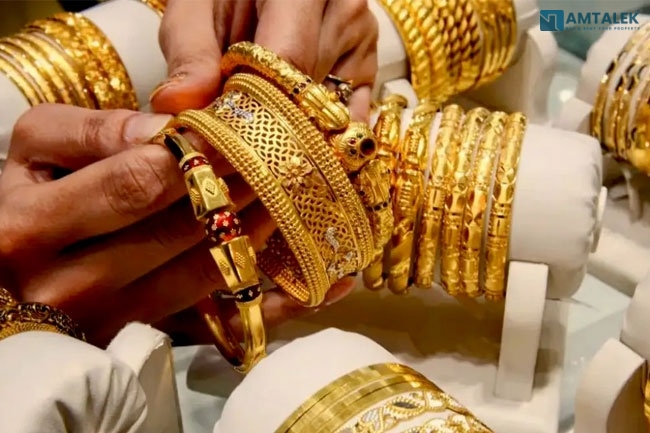
Gold price in Egypt Friday 12/06/2026
Gold
Share on
Copy Link
Download Options
Gold Price in Egypt Friday 12/06/2026
Friday, June 12, 2026 – The Egyptian gold market opened today with notable movements, reflecting a complex interplay of local economic factors and global trends. Investors, consumers, and traders are closely monitoring these shifts as gold continues to be a crucial asset in the Egyptian economy, often serving as a hedge against inflation and currency fluctuations. Amtalek is pleased to provide its readers with this comprehensive daily update on gold prices across various carats, offering insights into the market's current dynamics and potential future directions.
Today's market activity suggests a period of sensitivity, with prices reacting to both internal monetary policies and broader international economic indicators. Understanding these daily fluctuations is essential for making informed decisions, whether for investment, savings, or commercial purposes. This report aims to dissect the current pricing structure and the underlying forces shaping the value of gold in Egypt.
Gold Prices in Egyptian Market Today
The price of gold in Egypt is a dynamic figure, subject to constant adjustments based on a multitude of factors. These prices vary significantly depending on the carat purity of the gold, reflecting different levels of gold content. Carats such as 24, 22, 21, 18, and 12 are widely traded, with Carat 21 often being the most popular choice for both jewelry and investment due to its balance of purity and durability. The prices presented below represent the current buying and selling rates in the Egyptian market as of Friday, June 12, 2026. These figures are crucial for anyone looking to engage with the gold market, providing a snapshot of the prevailing conditions influenced by local supply and demand, the value of the Egyptian Pound, and international gold benchmarks.
It is important to note that the buy and sell prices reflect the market's spread, accounting for dealer margins and transactional costs. This detailed breakdown by carat ensures transparency and allows for a precise understanding of the market value for different types of gold products, from pure bullion to jewelry items.
| العيار | الشراء (جنيه مصري) | البيع (جنيه مصري) |
|---|---|---|
| ذهب عيار 24 | 7160 | 7104 |
| ذهب عيار 22 | 6563 | 6512 |
| ذهب عيار 21 | 6265 | 6216 |
| ذهب عيار 18 | 5370 | 5328 |
| ذهب عيار 12 | 3580 | 3552 |
| أونصة الذهب (Troy Ounce) | 222701 | 220959 |
| جنيه الذهب (8 جرام عيار 21) | 50120 | 49728 |
Highest and Lowest Gold Prices Today
An analysis of today's gold prices in the Egyptian market reveals a clear hierarchy based on purity. As expected, gold of the highest purity, Carat 24, commands the premium price, with a buying rate of 7160 EGP per gram. This carat, often preferred for bullion and investment, reflects the raw value of gold with minimal alloy content.
Conversely, Carat 12 gold, which contains a lower percentage of pure gold, registered the lowest price point, with a buying rate of 3580 EGP per gram. This significant difference, almost half the price of Carat 24, highlights the direct correlation between gold purity and market value. The price disparity across carats is a fundamental aspect of the gold market, catering to diverse consumer needs and budgets, from high-value investments to more affordable jewelry options.
Carat 21, widely favored in Egypt, sits comfortably in the middle range, priced at 6265 EGP for buying. This carat strikes a balance between purity and durability, making it ideal for both intricate jewelry designs and accessible investment. A standard gold pound (8 grams of Carat 21) is priced at a robust 50120 EGP for buying, representing a significant investment vehicle. Meanwhile, a Troy Ounce of gold, the international standard measure, stands at 222701 EGP for buying, underscoring the substantial value of larger gold quantities in local currency.
The spread between buying and selling prices for each carat also provides crucial information. For instance, Carat 24 has a buy-sell difference of 56 EGP (7160 - 7104), while Carat 21 shows a difference of 49 EGP (6265 - 6216). These differences represent the transaction costs and dealer margins, which are important considerations for both buyers and sellers in the market.
Factors Affecting Gold Prices in Egypt
Gold prices in Egypt are influenced by a complex web of interconnected local and global economic factors. Understanding these drivers is key to anticipating market movements and making informed decisions:
-
USD/EGP Exchange Rate
Perhaps the most immediate and impactful factor on local gold prices is the exchange rate between the US Dollar and the Egyptian Pound. Since gold is internationally priced in US Dollars, any depreciation of the Egyptian Pound against the Dollar automatically makes gold more expensive in local currency terms, even if the international dollar price of gold remains constant. This direct relationship means that fluctuations in the EGP's value are quickly reflected in domestic gold prices, making currency stability a major determinant for gold investors in Egypt.
-
Global Gold Market Trends
The Egyptian gold market is not isolated; it is inextricably linked to global gold trends. International spot prices, often driven by investor sentiment on major exchanges like COMEX, play a significant role. Factors such as global interest rates, the strength of the US dollar on international markets, and the overall perception of gold as a safe-haven asset directly influence these global benchmarks, which in turn trickle down to local pricing.
-
Central Bank Policies
The monetary policies enacted by the Central Bank of Egypt (CBE) have a profound effect. Changes in interest rates, for example, can alter the attractiveness of alternative investments like bank deposits or government bonds. Higher interest rates might reduce the appeal of holding non-yielding assets like gold, potentially leading to lower demand. Conversely, lower rates or quantitative easing measures can bolster gold's appeal as a store of value.
-
Inflation and Economic Conditions
Gold has historically been considered a strong hedge against inflation. When inflation rates are high and the purchasing power of the local currency erodes, investors often flock to gold to preserve their wealth. Egypt's economic conditions, including GDP growth, employment rates, and consumer confidence, all contribute to the overall sentiment towards gold as an investment or a commodity for stable savings.
-
International Demand and Supply
Global demand for gold, spanning jewelry, industrial use, and investment, impacts its international price. Major buying by central banks worldwide, especially from emerging economies, can significantly tighten global supply. On the supply side, factors such as mining output, recycling rates, and the availability of scrap gold also play a role in determining global prices, which then influence local markets.
-
Geopolitical Tensions
In times of global political instability, regional conflicts, or widespread economic uncertainty, gold often experiences heightened demand as a safe-haven asset. Investors tend to shift capital from riskier assets like stocks and bonds into gold, pushing its price upwards. The Middle East's geopolitical landscape and broader international tensions can therefore have a direct and often immediate impact on the perceived value and price of gold in Egypt.
Gold Price Forecast
Looking ahead, the Egyptian gold market is expected to remain highly sensitive to both domestic and international developments. In the short term, the stability of the Egyptian Pound against major foreign currencies, particularly the US Dollar, will be a critical determinant. Any further depreciation could lead to an upward revision in local gold prices, making it a more expensive commodity for Egyptian consumers and investors.
Globally, the trajectory of inflation in major economies, along with central bank interest rate decisions, will continue to steer international gold prices. Should global inflationary pressures persist, and central banks adopt a more dovish stance or pause rate hikes, gold's appeal as an inflation hedge could strengthen, providing upward momentum. Conversely, aggressive monetary tightening could temper gold's gains.
Geopolitical stability, or the lack thereof, will also cast a long shadow over gold's performance. Escalating tensions in any part of the world typically trigger safe-haven buying, which could support higher prices. Given these ongoing variables, the gold market in Egypt is likely to exhibit continued volatility in the coming days and weeks. Investors are advised to closely monitor economic indicators and geopolitical headlines to make well-informed decisions in this dynamic environment.
Latest News
No news available