
Share this Article
Share this Article
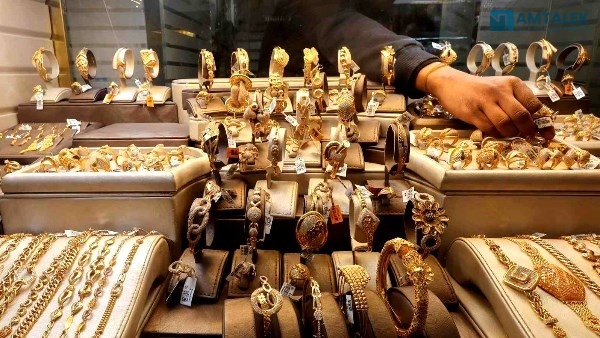
Gold price in Egypt Monday 22/06/2026
Gold
Share on
Copy Link
Download Options
Gold price in Egypt Monday 22/06/2026
Monday 22/06/2026
The gold market in Egypt opened on Monday, June 22, 2026, with a keen eye on both domestic economic indicators and international market movements. Investors and consumers alike are closely monitoring the precious metal's performance, which continues to serve as a crucial barometer of economic stability and a preferred safe-haven asset amidst ongoing global uncertainties. This daily gold price service is proudly provided by Amtalek, offering a comprehensive overview of the market to help you make informed decisions.
Today's prices reflect a complex interplay of factors, including the local exchange rate dynamics, global gold spot prices, and prevailing economic sentiments. While the Egyptian market often exhibits its unique characteristics, it remains inextricably linked to broader international trends. As the day progresses, traders and analysts will be watching for any shifts that could influence the metal's trajectory, whether driven by central bank announcements, geopolitical developments, or changes in investment sentiment.
Gold Prices in Egyptian Market Today
Gold prices in the Egyptian market are subject to daily fluctuations, varying significantly depending on the carat purity and the prevailing supply and demand conditions. Different carats, such as 24, 22, 21, 18, and 12, represent distinct levels of gold purity, with higher carat numbers indicating a greater percentage of pure gold. Consequently, the price per gram directly correlates with this purity, making carat 24 the most expensive and carat 12 the most affordable.
The prices listed below represent the current buying and selling rates for various gold carats, as well as the price of a Troy Ounce and the Egyptian Gold Pound (8 grams of 21-carat gold). These figures are essential for anyone looking to invest in, buy, or sell gold, providing a clear snapshot of the market's pulse at the start of the trading day.
| العيار | الشراء (جنيه مصري) | البيع (جنيه مصري) |
|---|---|---|
| ذهب عيار 24 | 6829 | 6795 |
| ذهب عيار 22 | 6260 | 6229 |
| ذهب عيار 21 | 5975 | 5946 |
| ذهب عيار 18 | 5122 | 5096 |
| ذهب عيار 12 | 3414 | 3398 |
| أونصة الذهب (Troy Ounce) | 212406 | 211348 |
| جنيه الذهب (8 جرام عيار 21) | 47800 | 47568 |
Highest and Lowest Gold Prices Today
Analyzing the provided table for Monday, June 22, 2026, we can clearly identify the spectrum of gold prices based on purity. As expected, gold of the highest purity, Carat 24, commands the highest price in the market, with a buying rate of EGP 6829 per gram. This carat is often favored by serious investors and for industrial applications where purity is paramount.
Conversely, Carat 12 gold represents the lowest price point among the listed options, with a buying rate of EGP 3414 per gram. This lower purity gold is less common for investment purposes but might be found in certain specialized jewelry items.
The most widely traded and popular carat in the Egyptian market, Carat 21, is priced at EGP 5975 for buying. This carat strikes a balance between purity and durability, making it a preferred choice for jewelry and a significant component of investment products like the Gold Pound. Carat 18, another popular choice for jewelry, is available at EGP 5122 per gram for buying, offering a more affordable option while retaining good quality.
Beyond the per-gram prices, the table also highlights the price of an ounce of gold (Troy Ounce) at EGP 212406 for buying, reflecting its global valuation. The Egyptian Gold Pound, an important local investment vehicle consisting of 8 grams of 21-carat gold, is priced at EGP 47800 for buying. These larger units provide a different scale for investors, often offering a slight premium or discount based on market liquidity and demand for specific physical forms.
The price differences between carats are substantial, underscoring the importance of understanding purity when engaging in gold transactions. The spread between Carat 24 and Carat 12, for instance, is EGP 3415, demonstrating how purity directly impacts value. The consistency in the buying and selling price spread across all carats also indicates the market's current liquidity and transaction costs.
Factors Affecting Gold Prices in Egypt
Gold prices in Egypt are influenced by a confluence of local and international economic factors. Understanding these drivers is crucial for anyone seeking to navigate the market effectively.
USD/EGP Exchange Rate
One of the most significant determinants of local gold prices is the exchange rate between the US Dollar and the Egyptian Pound. Gold is primarily traded in US Dollars on international markets. When the Egyptian Pound depreciates against the Dollar, the cost of importing gold (or the valuation of existing gold in local currency) increases, leading to higher gold prices in EGP. Conversely, a stronger Pound can put downward pressure on local gold prices. The stability and availability of foreign currency in the official banking system, as well as the dynamics of the parallel market, play a critical role in shaping this relationship.
Global Gold Market Trends
Egyptian gold prices do not exist in isolation. They are heavily influenced by global gold market trends, particularly the international spot price of gold (often benchmarked against the London Bullion Market Association's fix or COMEX futures). Factors such as global interest rates (especially by the US Federal Reserve), the strength of the US Dollar index, and overall investor sentiment towards riskier assets versus safe havens, all impact the international price. Any significant movement in the global price will inevitably cascade into the local Egyptian market, albeit with a slight delay or local premium/discount.
Central Bank Policies
The Central Bank of Egypt's monetary policies have a direct bearing on gold prices. Decisions regarding interest rates, for example, can affect the attractiveness of gold as an investment. Higher interest rates typically make fixed-income assets more appealing, potentially reducing demand for non-yielding gold. Additionally, the Central Bank's management of foreign reserves and its interventions in the foreign exchange market can indirectly influence the USD/EGP rate, thereby impacting local gold prices.
Inflation and Economic Conditions
Gold is widely regarded as a hedge against inflation. When inflation rates are high, the purchasing power of fiat currencies erodes, prompting investors to seek refuge in assets that traditionally retain their value, such as gold. In Egypt, persistent inflationary pressures often lead to increased demand for gold, pushing prices upward. Broader economic conditions, including GDP growth, employment rates, and consumer confidence, also play a role, as a challenging economic environment often encourages safe-haven buying.
International Demand and Supply
The global balance of gold demand and supply is another critical factor. On the supply side, this includes new gold mining output, recycling of old gold, and central bank sales. On the demand side, major drivers include jewelry consumption (especially from key markets like India and China), industrial demand, and investment demand (ETFs, physical bars, coins). Any significant imbalance, such as a surge in global investment demand due to economic uncertainty or a dip in mining output, can drive international prices higher, which then translates to the Egyptian market.
Geopolitical Tensions
Geopolitical instability and conflicts are powerful catalysts for gold price appreciation. Events such as wars, political crises, trade disputes, or regional tensions often trigger a flight to safety, with investors flocking to gold as a reliable store of value during times of uncertainty. The Middle East and North Africa region, in particular, is susceptible to such developments, and any escalation of tensions can quickly lead to a spike in global and subsequently local gold prices as investors seek to protect their wealth.
Gold Price Forecast
Looking ahead, the gold market in Egypt is expected to remain highly sensitive to a combination of internal and external factors. In the short term, the stability of the Egyptian Pound against major foreign currencies, particularly the US Dollar, will be a primary determinant of local gold price movements. Any significant shifts in the official or parallel exchange rates could lead to immediate reactions in the price of the precious metal.
Globally, the outlook for gold will largely depend on the trajectory of inflation, the monetary policies of major central banks (especially the US Federal Reserve), and the overall geopolitical landscape. Should global economic uncertainties persist or deepen, and if inflation remains a concern, gold's appeal as a safe-haven asset is likely to strengthen, potentially pushing international prices higher. This would, in turn, provide upward momentum for gold prices in Egypt.
Conversely, signs of global economic recovery, coupled with aggressive interest rate hikes by central banks, could temper gold's allure, leading to some price consolidation. However, given the current complex global environment and the intrinsic value of gold as a wealth preservation tool, it is anticipated that gold will continue to be a favored asset for many Egyptian investors. We advise investors to stay informed on economic news and market trends to make the most prudent decisions in the coming days.
Latest News
No news available