
Share this Article
Share this Article
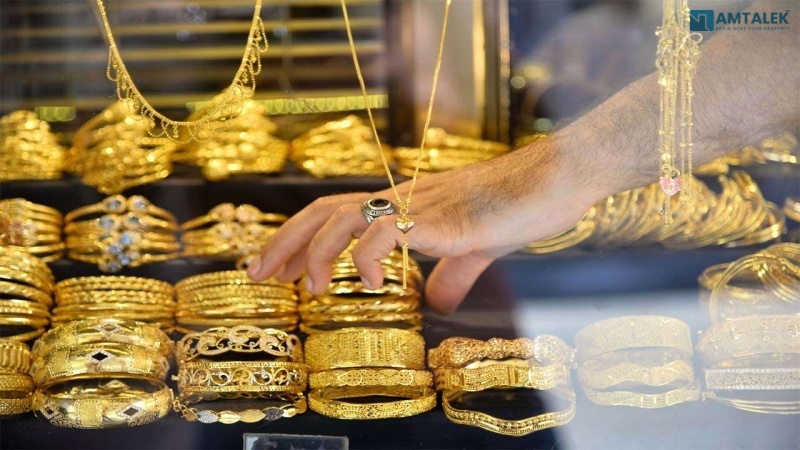
Gold price in Egypt Saturday 13/06/2026
Gold
Share on
Copy Link
Download Options
Gold Price in Egypt Saturday 13/06/2026
Saturday 13/06/2026
The Egyptian gold market is once again under the spotlight as investors and consumers alike closely monitor the precious metal's daily fluctuations. Today, Saturday, June 13, 2026, the local gold market presents a complex picture, influenced by a confluence of domestic economic indicators and global market dynamics. As a vital safe-haven asset and a traditional store of value, gold's performance in Egypt remains a key indicator of economic sentiment. This comprehensive gold price update and market analysis service is proudly provided by Amtalek, ensuring you have the most accurate and timely information to navigate your investment decisions.
The past week has seen a degree of volatility, reflecting ongoing uncertainties in both the regional and international arenas. While global gold prices have shown a tendency to react to shifts in interest rate expectations and geopolitical developments, the Egyptian market adds its own unique layers of complexity, primarily driven by the local currency exchange rate and domestic demand patterns. Understanding these intertwined forces is crucial for anyone looking to buy, sell, or invest in gold within Egypt.
Gold Prices in Egyptian Market Today
Gold prices in Egypt are meticulously calculated based on several factors, including the global spot price of gold, the USD/EGP exchange rate, and local supply and demand dynamics. The purity of gold, measured in carats, is also a primary determinant of its value, with higher carats indicating a greater proportion of pure gold. Below is a detailed breakdown of today's gold prices across various carats in the Egyptian market, offering a clear snapshot for potential buyers and sellers.
| العيار | الشراء (جنيه مصري) | البيع (جنيه مصري) |
|---|---|---|
| ذهب عيار 24 | 7137 | 7103 |
| ذهب عيار 22 | 6542 | 6511 |
| ذهب عيار 21 | 6245 | 6215 |
| ذهب عيار 18 | 5353 | 5327 |
| ذهب عيار 12 | 3568 | 3552 |
| أونصة الذهب (Troy Ounce) | 221986 | 220928 |
| جنيه الذهب (8 جرام عيار 21) | 49960 | 49720 |
Highest and Lowest Gold Prices Today
An analysis of today's gold prices in the Egyptian market reveals the clear hierarchy based on purity. Gold carat 24, being the purest form available, naturally commands the highest price, reaching 7137 EGP for buying. This reflects its premium status for investment and industrial applications where maximum purity is essential. Conversely, gold carat 12, with its lower gold content, registers the lowest price at 3568 EGP for buying, making it the most accessible option for those seeking a more budget-friendly entry into the gold market, often for decorative purposes.
The most popular carat in Egypt, carat 21, which is widely used for jewelry, is priced at 6245 EGP for buying. This carat strikes a balance between purity and durability, making it a preferred choice for consumers. Carat 18, another common choice for jewelry, is noted at 5353 EGP for buying, illustrating a significant price difference of 892 EGP per gram compared to carat 21, due to its lower gold content. The price of a full gold pound (8 grams of 21-carat gold) stands at 49960 EGP for buying, a crucial benchmark for larger investments. Meanwhile, the Troy Ounce, the international standard for gold measurement, is trading at 221986 EGP for buying, highlighting the substantial value of this precious metal on a global scale.
Factors Affecting Gold Prices in Egypt
The trajectory of gold prices in Egypt is influenced by a complex interplay of local and international factors. Understanding these drivers is essential for anticipating market movements:
USD/EGP Exchange Rate
The exchange rate between the US Dollar and the Egyptian Pound is arguably the most significant determinant of local gold prices. Since gold is globally priced in US Dollars, any depreciation of the Egyptian Pound against the Dollar automatically increases the cost of gold when converted into local currency, even if the international dollar price remains stable. Conversely, a stronger EGP can lead to lower local gold prices. Fluctuations in the official exchange rate, as well as the parallel market rate, have a direct and immediate impact on the cost of importing and purchasing gold within Egypt.
Global Gold Market Trends
International gold prices, often referred to as the spot price, are set by global supply and demand, geopolitical events, and monetary policies of major central banks. Factors such as inflation expectations in the US and Europe, interest rate decisions by the Federal Reserve, and the overall strength of the US dollar on international markets all play a crucial role. When global gold prices rise, it typically translates to higher prices in Egypt, and vice versa, assuming the USD/EGP exchange rate remains constant.
Central Bank Policies
The monetary policies adopted by the Central Bank of Egypt (CBE) can significantly affect the local gold market. Changes in interest rates, for instance, can influence the attractiveness of alternative investments like bank deposits versus gold. Higher interest rates might make fixed-income investments more appealing, potentially diverting capital away from gold. Additionally, any measures taken by the CBE to manage inflation or stabilize the local currency can have ripple effects on gold's perceived value as a hedge.
Inflation and Economic Conditions
Gold has historically served as a reliable hedge against inflation. In periods of rising inflation and economic uncertainty, investors often flock to gold to preserve their purchasing power. Egypt's economic stability, inflation rates, and overall growth prospects directly influence local demand for gold. When the economic outlook is uncertain, local demand for gold tends to increase, pushing prices higher. Conversely, a robust economy might see investors shifting towards more growth-oriented assets.
International Demand and Supply
Global demand for gold, driven by jewelry consumption, industrial use, and investment, alongside the supply from mining operations and central bank reserves, determines the international gold price. Any significant shifts in these global supply-demand dynamics can impact the international spot price, which then filters down to local markets like Egypt. For example, increased buying by central banks globally or a surge in demand from major Asian markets can push prices upwards.
Geopolitical Tensions
Gold's status as a safe-haven asset means its value often appreciates during times of geopolitical instability, regional conflicts, or global crises. Investors tend to seek refuge in gold when other asset classes appear risky. Given the volatile geopolitical landscape in the wider Middle East and globally, any escalation of tensions can lead to a surge in gold prices, as seen in various historical instances. This factor often contributes to gold's appeal in Egypt, where regional stability can be a concern.
Gold Price Forecast
Looking ahead, the Egyptian gold market is expected to remain highly sensitive to both domestic economic policies and the evolving global financial landscape. While the safe-haven appeal of gold continues to provide a floor for its price, significant upward or downward movements will likely hinge on the trajectory of the USD/EGP exchange rate and any major shifts in international gold prices. Investors should closely monitor the Central Bank's upcoming policy decisions, particularly regarding interest rates and currency management, as these will be critical in shaping the local market sentiment.
Furthermore, global inflation data and the actions of major central banks abroad will continue to exert influence. A sustained period of global economic uncertainty or persistent inflation could bolster gold's appeal. However, any signs of aggressive monetary tightening by global central banks might temper its rally. For the coming days, a cautious outlook is advised, with potential for continued minor fluctuations as the market digests new economic data and geopolitical developments. Long-term investors may still view gold as a valuable component of a diversified portfolio, especially given its historical resilience.
Latest News
No news available