
Share this Article
Share this Article
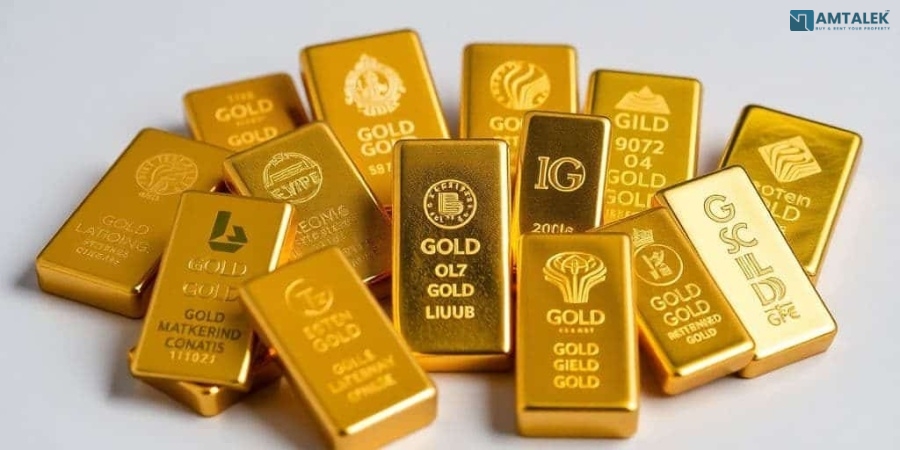
Gold price in Egypt Saturday 18/07/2026
Gold
Share on
Copy Link
Download Options
Gold Price in Egypt Saturday 18/07/2026
Saturday 18/07/2026
The Egyptian gold market opens this Saturday, 18th July 2026, with investors and consumers closely monitoring the latest price movements. Gold, a perennial safe-haven asset, continues to capture significant attention amidst evolving economic landscapes both domestically and internationally. This daily gold price service, reflecting the dynamic shifts in the market, is proudly provided by Amtalek, ensuring our readers have access to timely and accurate information to guide their financial decisions.
Today's prices reflect a complex interplay of global market trends, local economic indicators, and consumer demand. While the international spot price of gold provides a fundamental benchmark, the local valuation in Egyptian Pounds is heavily influenced by the exchange rate, inflation expectations, and the overall economic sentiment within Egypt. We delve into the specifics of today's prices and the various factors shaping them, offering a comprehensive overview for anyone interested in the precious metal.
Gold Prices in Egyptian Market Today
Gold prices in the Egyptian market are dynamic, fluctuating throughout the day based on a multitude of factors. These prices are typically presented for different carats, reflecting the purity of the gold, with 24-carat being the purest and thus the most expensive per gram, followed by 22-carat, 21-carat, and 18-carat. The 21-carat gold remains the most popular choice for investment and jewelry in Egypt due to its balance of purity and durability. Below is a detailed breakdown of gold prices across various carats for buying and selling today, Saturday 18th July 2026.
| العيار | الشراء (جنيه مصري) | البيع (جنيه مصري) |
|---|---|---|
| ذهب عيار 24 | 6629 | 6606 |
| ذهب عيار 22 | 6077 | 6056 |
| ذهب عيار 21 | 5800 | 5780 |
| ذهب عيار 18 | 4972 | 4954 |
| ذهب عيار 12 | 3314 | 3303 |
| أونصة الذهب (Troy Ounce) | 206185 | 205470 |
| جنيه الذهب (8 جرام عيار 21) | 46400 | 46240 |
Highest and Lowest Gold Prices Today
Analyzing today's gold prices reveals the inherent value differences across various purities. As expected, 24-carat gold, representing the highest purity available, commands the highest price per gram in the Egyptian market today. The buying price for 24-carat gold stands at 6629 Egyptian Pounds, while the selling price is slightly lower at 6606 Egyptian Pounds. This premium reflects its superior quality and suitability for specific industrial applications or as a pure investment vehicle.
Conversely, 12-carat gold registers the lowest price point among the listed carats, with a buying price of 3314 Egyptian Pounds and a selling price of 3303 Egyptian Pounds. This lower valuation is directly attributable to its reduced gold content, making it a more accessible option for certain types of jewelry where durability and intricate design are prioritized over pure gold content.
The most commonly traded 21-carat gold, a staple in the Egyptian market, is priced at 5800 Egyptian Pounds for buying and 5780 Egyptian Pounds for selling. This carat strikes a balance between purity and resilience, making it highly favored for both personal adornment and modest investment. The price difference between 24-carat and 21-carat gold per gram highlights the significant impact of purity on value, with approximately an 829 EGP per gram difference in buying prices.
For larger investments, the price of a gold ounce (Troy Ounce) is a critical benchmark, currently at 206185 Egyptian Pounds for buying and 205470 Egyptian Pounds for selling. The Gold Pound, which contains 8 grams of 21-carat gold, is another popular investment choice, with a buying price of 46400 Egyptian Pounds and a selling price of 46240 Egyptian Pounds. These figures underscore the substantial capital required for larger gold holdings, yet also reflect the potential for significant value preservation and appreciation.
Factors Affecting Gold Prices in Egypt
Gold prices in Egypt are influenced by a complex web of local and international economic factors. Understanding these drivers is crucial for anyone looking to invest in or trade gold.
-
USD/EGP Exchange Rate
One of the most significant determinants of local gold prices is the exchange rate between the US Dollar and the Egyptian Pound. Since gold is globally priced in US Dollars, any depreciation of the Egyptian Pound against the Dollar automatically makes gold more expensive in local currency terms, even if the international spot price remains constant. Conversely, a stronger EGP could lead to lower local gold prices. The stability or volatility of the exchange rate directly translates into the local cost of gold, making it a primary concern for Egyptian investors.
-
Global Gold Market Trends
The international spot price of gold, driven by global supply and demand dynamics, investor sentiment, and macroeconomic indicators in major economies, inevitably impacts local prices. Factors such as interest rate decisions by the US Federal Reserve, movements in bond yields, and the performance of other major currencies against the dollar all contribute to the global price of gold. When global gold prices rise, Egyptian prices tend to follow suit, adjusted for the exchange rate.
-
Central Bank Policies
The Central Bank of Egypt's monetary policies, particularly interest rate decisions, play a pivotal role. Higher interest rates make fixed-income investments more attractive, potentially diverting funds away from gold, which doesn't offer yields. Conversely, lower interest rates can boost gold's appeal as a store of value. Furthermore, the Central Bank's interventions in the foreign exchange market can directly affect the USD/EGP rate, thereby impacting local gold prices.
-
Inflation and Economic Conditions
Gold is widely regarded as a hedge against inflation. In periods of high inflation, the purchasing power of fiat currencies erodes, prompting investors to seek refuge in assets like gold that tend to retain their value. Egypt's inflation rates and overall economic health, including GDP growth and employment figures, significantly influence investor confidence and their propensity to allocate funds to gold. Economic uncertainty often correlates with increased demand for gold.
-
International Demand and Supply
Global demand for gold, particularly from major gold-consuming nations like India and China, as well as demand from central banks and the jewelry industry, can influence international prices. On the supply side, mining output, recycling rates, and sales from central bank reserves also play a role. A robust increase in global demand coupled with constrained supply typically pushes prices higher, which then reflects in the Egyptian market.
-
Geopolitical Tensions
Geopolitical instability, conflicts, and major global crises often trigger a flight to safety, with investors flocking to traditional safe-haven assets like gold. Tensions in the Middle East, global trade wars, or widespread political uncertainty can significantly boost gold's appeal, driving up its price internationally and subsequently in Egypt. Gold acts as a reliable store of value when other investment avenues appear risky.
Gold Price Forecast
Looking ahead, the trajectory of gold prices in Egypt remains subject to the interplay of both domestic and international factors. The ongoing global economic environment, marked by varying inflation outlooks and central bank responses, will continue to provide a backdrop for gold's performance. Should global geopolitical tensions persist or escalate, demand for gold as a safe haven could see further impetus. Domestically, the stability of the Egyptian Pound against the US Dollar and the Central Bank's monetary policy decisions will be paramount in shaping local price movements.
Analysts suggest that gold may continue to exhibit volatility in the short term, but its long-term appeal as a hedge against inflation and economic uncertainty is likely to remain strong. Investors should closely monitor global economic data, interest rate announcements from key central banks, and the local exchange rate to make informed decisions. While predictions are inherently challenging, the fundamental drivers supporting gold's value suggest it will continue to be a crucial component of diversified investment portfolios in Egypt.
Latest News
No news available