
Share this Article
Share this Article
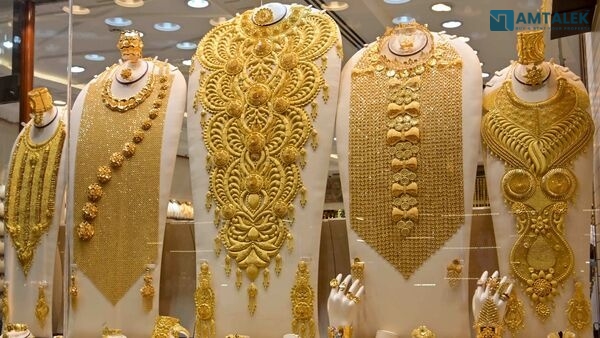
Gold price in Egypt Sunday 05/07/2026
Gold
Share on
Copy Link
Download Options
Gold price in Egypt Sunday 05/07/2026
The Egyptian gold market experienced a period of moderate fluctuation at the start of trading on Sunday, July 5, 2026. This daily analysis of gold prices across various carats, including the popular 21-carat and 24-carat gold, is provided exclusively by Amtalek, offering essential insights for investors, traders, and consumers in Egypt. Understanding the intricate dynamics of the local and international gold markets is crucial, as several economic indicators continue to shape the precious metal's valuation.
Today's prices reflect a combination of domestic economic conditions, including the exchange rate of the Egyptian Pound against major currencies, and global gold market trends. While the precious metal generally serves as a safe-haven asset during times of economic uncertainty, its price in Egypt is particularly sensitive to local supply and demand pressures, as well as the broader sentiment within the Egyptian economy. Amtalek is committed to delivering timely and accurate updates to help navigate these complexities.
Gold Prices in Egyptian Market Today
Gold prices in Egypt are subject to daily adjustments based on a multitude of factors, with variations typically observed across different carats. The purity of gold, measured in carats, directly influences its price per gram. Carats such as 24, 22, 21, 18, and 12 are commonly traded, with 21-carat gold being the most prevalent choice for both jewelry and investment in the Egyptian market due to its balance of purity and durability. The following table provides a comprehensive overview of gold prices per gram for various carats, along with the price of a Troy Ounce and the Gold Pound (8 grams of 21K), for today, Sunday 05/07/2026.
| العيار | الشراء (جنيه مصري) | البيع (جنيه مصري) |
|---|---|---|
| ذهب عيار 24 | 6726 | 6703 |
| ذهب عيار 22 | 6166 | 6144 |
| ذهب عيار 21 | 5885 | 5865 |
| ذهب عيار 18 | 5044 | 5027 |
| ذهب عيار 12 | 3363 | 3352 |
| أونصة الذهب (Troy Ounce) | 209202 | 208487 |
| جنيه الذهب (8 جرام عيار 21) | 47080 | 46920 |
Highest and Lowest Gold Prices Today
Analyzing today's gold prices reveals clear distinctions based on purity. As expected, 24-carat gold, being the purest form commonly traded, commands the highest price per gram at 6726 EGP for buying. This reflects its intrinsic value and desirability for investors seeking maximum purity. In contrast, 12-carat gold, with its lower gold content, registers the lowest price per gram at 3363 EGP for buying, making it the most affordable option on the market today.
The price difference between the highest and lowest carats is substantial, illustrating the premium placed on purity. For instance, a gram of 24-carat gold is nearly double the price of a gram of 12-carat gold. The widely popular 21-carat gold sits comfortably in the middle, priced at 5885 EGP for buying, offering a balance that appeals to both investors and those purchasing jewelry. The spread between buying and selling prices, though relatively small for individual grams, becomes significant for larger transactions, such as a Troy Ounce (209202 EGP buy vs. 208487 EGP sell) or a Gold Pound (47080 EGP buy vs. 46920 EGP sell), highlighting the transaction costs inherent in the market.
The Gold Pound, which contains 8 grams of 21-carat gold, is priced at 47080 EGP for buying. This aligns perfectly with the individual gram price of 21-carat gold (5885 EGP * 8 = 47080 EGP), indicating a consistent pricing structure across different forms of gold for the same purity.
Factors Affecting Gold Prices in Egypt
The price of gold in Egypt is influenced by a complex interplay of local and global economic factors. Understanding these drivers is essential for anyone involved in the gold market:
USD/EGP Exchange Rate
The exchange rate between the US Dollar and the Egyptian Pound is arguably the most significant domestic factor affecting gold prices. Since gold is primarily traded internationally in US Dollars, any depreciation of the Egyptian Pound against the Dollar makes imported gold more expensive in local currency terms. This direct correlation means that a stronger Dollar against the EGP typically pushes up gold prices in Egypt, acting as a crucial hedge against currency devaluation for local investors.
Global Gold Market Trends
International gold prices, determined by global supply and demand dynamics, geopolitical events, and the performance of major economies, set a baseline for local prices. Movements in the London Bullion Market Association (LBMA) fix or COMEX futures contracts have a ripple effect on the Egyptian market. A surge in global demand or a dip in international interest rates can drive up the world price of gold, which is then reflected in Egypt, adjusted for the local exchange rate.
Central Bank Policies
The monetary policies implemented by the Central Bank of Egypt (CBE) play a vital role. Changes in interest rates, for instance, can impact the attractiveness of gold as an investment. Higher interest rates on savings or government bonds may divert investment away from non-yield-bearing assets like gold, potentially dampening local demand. Conversely, lower interest rates or quantitative easing policies can make gold a more appealing store of value.
Inflation and Economic Conditions
Gold is widely regarded as a traditional hedge against inflation. When inflation rates are high, and the purchasing power of the local currency erodes, investors often turn to gold to preserve their wealth. Periods of economic uncertainty, high inflation, or a lack of confidence in traditional financial instruments tend to increase demand for gold in Egypt, driving up its price. Conversely, robust economic growth and stability might reduce the urgency to invest in safe-haven assets.
International Demand and Supply
Beyond Egypt's borders, global demand for gold from central banks, institutional investors, and jewelers, coupled with mining output and recycling supply, dictates the international price. Significant shifts in these global supply and demand dynamics, such as large purchases by central banks or disruptions in mining operations, can influence the world market price and subsequently affect prices in Egypt.
Geopolitical Tensions
Periods of geopolitical instability, regional conflicts, or major international crises often trigger a flight to safety, with investors flocking to assets perceived as secure, like gold. As a universal safe-haven asset, gold's price tends to rise during such times. Given Egypt's strategic location, regional and international geopolitical developments can have a direct and immediate impact on local gold market sentiment and prices.
Gold Price Forecast
Looking ahead, the gold market in Egypt is likely to remain influenced by a blend of domestic economic reforms and global market volatility. While short-term fluctuations are always possible, the underlying factors suggest a continued strong interest in gold as a wealth preservation tool. The trajectory of the USD/EGP exchange rate will be a primary determinant, with any further adjustments potentially leading to upward pressure on local gold prices.
Globally, ongoing concerns about inflation in major economies, coupled with potential shifts in central bank policies worldwide, could maintain gold's appeal as a hedge. Geopolitical developments, particularly in the Middle East and globally, will also continue to play a significant role in shaping safe-haven demand. Investors and consumers in Egypt should monitor these indicators closely, as they will dictate the market's direction in the coming days and weeks. While the market exhibits some stability today, the potential for rapid shifts remains a characteristic feature of precious metals trading.
Latest News
No news available