
Share this Article
Share this Article
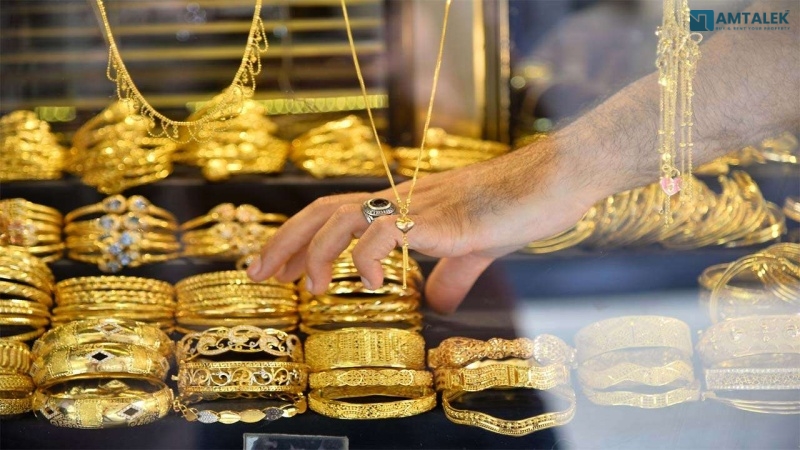
Gold price in Egypt Sunday 14/06/2026
Gold
Share on
Copy Link
Download Options
Gold price in Egypt Sunday 14/06/2026
Welcome to Amtalek's daily gold market update, your trusted source for real-time gold prices and expert analysis in Egypt. As of Sunday, June 14, 2026, the Egyptian gold market continues to navigate a complex interplay of local and international economic forces. Today's report provides a comprehensive overview of gold prices across various carats, highlights key market movements, and delves into the critical factors shaping the precious metal's trajectory.
Investors and consumers alike are closely watching the performance of gold, which traditionally serves as a safe-haven asset amidst economic uncertainties. The current landscape, characterized by evolving exchange rates, global market sentiment, and domestic economic policies, significantly influences the purchasing power and investment appeal of gold within Egypt. Amtalek is committed to delivering timely and accurate information to help you make informed decisions in this dynamic market.
Gold Prices in Egyptian Market Today
Gold prices in the Egyptian market are subject to daily fluctuations, reflecting shifts in global spot prices, the local exchange rate of the Egyptian Pound against major currencies, and domestic supply and demand dynamics. The price of gold varies significantly based on its purity, measured in carats, with higher carats commanding higher prices due to their greater gold content. Below is a detailed breakdown of gold prices for various carats as of today, Sunday, June 14, 2026, for both buying and selling.
| العيار | الشراء (جنيه مصري) | البيع (جنيه مصري) |
|---|---|---|
| ذهب عيار 24 | 7177 | 7143 |
| ذهب عيار 22 | 6579 | 6548 |
| ذهب عيار 21 | 6280 | 6250 |
| ذهب عيار 18 | 5383 | 5357 |
| ذهب عيار 12 | 3588 | 3572 |
| أونصة الذهب (Troy Ounce) | 223230 | 222172 |
| جنيه الذهب (8 جرام عيار 21) | 50240 | 50000 |
Highest and Lowest Gold Prices Today
Analyzing today's gold prices reveals a clear hierarchy based on purity. Gold of 24 carat, representing the highest purity available, naturally commands the highest price in the market. Today, the buying price for 24 carat gold stands at 7177 EGP per gram, while the selling price is 7143 EGP per gram. This high value reflects its significant gold content, making it a preferred choice for investors seeking maximum intrinsic value.
Conversely, 12 carat gold, with its lower purity, is positioned at the more affordable end of the spectrum. The buying price for 12 carat gold is 3588 EGP per gram, and the selling price is 3572 EGP per gram. This difference of nearly double the price between 12 and 24 carat gold underscores the direct correlation between gold content and market value.
The widely popular 21 carat gold, a common choice for both jewelry and investment in Egypt, is priced at 6280 EGP for buying and 6250 EGP for selling. The 18 carat gold, another popular option for intricate jewelry designs, is available at 5383 EGP for buying and 5357 EGP for selling. These prices demonstrate the varied options available to consumers and investors, catering to different budgets and preferences.
Beyond per-gram prices, the market also tracks larger denominations. A Troy Ounce of gold, an international standard unit, is priced at 223230 EGP for buying and 222172 EGP for selling. The Egyptian Gold Pound (Gineh El Dahab), which is typically 8 grams of 21 carat gold, is quoted at 50240 EGP for buying and 50000 EGP for selling. These figures are crucial for larger-scale investments and provide a comprehensive view of the market's offerings.
Factors Affecting Gold Prices in Egypt
The price of gold in Egypt is influenced by a confluence of domestic and international economic factors. Understanding these drivers is essential for anticipating market movements and making sound investment decisions.
USD/EGP Exchange Rate
The exchange rate between the US Dollar and the Egyptian Pound is perhaps the most significant local determinant of gold prices. Since gold is primarily traded in US dollars on international markets, any depreciation of the Egyptian Pound against the dollar directly translates into higher gold prices in local currency. Conversely, a strengthening EGP can lead to a decrease in local gold prices, even if international prices remain stable. This relationship makes gold a popular hedge against local currency devaluation.
Global Gold Market Trends
International gold prices, driven by global supply and demand, central bank policies, and macroeconomic indicators in major economies, exert a strong influence on the Egyptian market. If global gold prices rise due to increased investor demand for safe-haven assets or inflationary concerns, local prices in Egypt will generally follow suit, adjusted for the prevailing exchange rate. Monitoring global spot gold prices is therefore crucial for Egyptian market participants.
Central Bank Policies
The monetary policies enacted by the Central Bank of Egypt (CBE) play a vital role. Interest rate decisions, in particular, can impact gold's attractiveness. When the CBE raises interest rates, fixed-income investments like bank deposits become more appealing, potentially diverting capital away from gold. Conversely, lower interest rates can make gold, which offers no yield, more competitive as an investment asset, especially in an inflationary environment.
Inflation and Economic Conditions
Gold has historically been regarded as a hedge against inflation. In periods of high inflation, where the purchasing power of fiat currencies erodes, investors often turn to gold to preserve wealth. Egypt's economic conditions, including inflation rates, economic growth forecasts, and consumer confidence, directly affect the demand for gold as both an investment and a store of value. A struggling economy or high inflation typically boosts demand for gold.
International Demand and Supply
The global balance of demand and supply for gold significantly impacts its international price, which then filters down to local markets. Factors such as jewelry demand from major consumers like India and China, investment demand from institutional and retail investors, and gold mining output all contribute to this balance. Significant shifts in global demand or supply can create ripples that are felt in the Egyptian gold market.
Geopolitical Tensions
Global geopolitical events and uncertainties, such as conflicts, political instability, or major trade disputes, often trigger a flight to safety. Gold, being a traditional safe-haven asset, tends to appreciate during such times as investors seek refuge from market volatility. The impact of these global tensions can lead to spikes in international gold prices, which are then reflected in the Egyptian market, often reinforcing gold's appeal during turbulent periods.
Gold Price Forecast
Looking ahead, the gold market in Egypt is expected to remain highly sensitive to both local and international developments. Given the current global economic uncertainties and the potential for continued volatility in the USD/EGP exchange rate, gold is likely to maintain its appeal as a safe-haven asset for Egyptian investors. Should global geopolitical tensions escalate or if there are further signs of inflationary pressures worldwide, international gold prices could see an upward trend, which would then likely be reflected in the local market, assuming a stable or depreciating EGP.
Domestically, the Central Bank of Egypt's future monetary policy decisions, particularly regarding interest rates, will be crucial. Any move towards lower rates could enhance gold's attractiveness, while sustained high rates might temper demand. However, the prevailing sentiment of hedging against inflation and currency depreciation will likely continue to underpin demand for gold in Egypt. Investors should remain vigilant, closely monitoring economic indicators and geopolitical news to make informed decisions in the coming days and weeks.
Latest News
No news available