
Share this Article
Share this Article
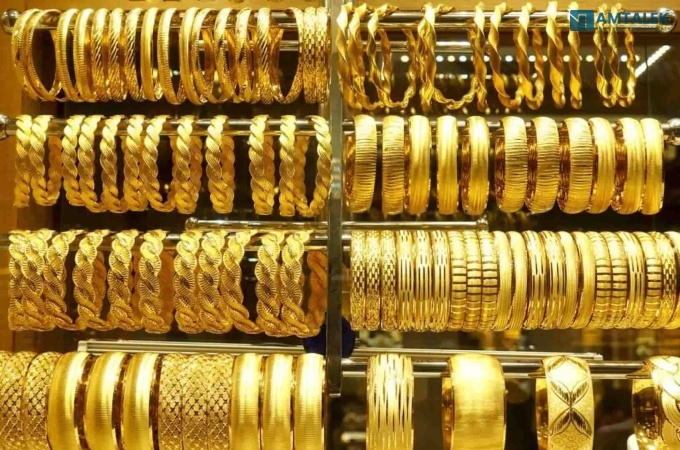
Gold price in Egypt Thursday 09/07/2026
Gold
Share on
Copy Link
Download Options
Gold price in Egypt Thursday 09/07/2026
Thursday 09/07/2026
The Egyptian gold market experienced notable fluctuations on Thursday, July 9, 2026, reflecting a dynamic interplay of local economic indicators and global market sentiments. As investors and consumers closely monitor price movements, understanding the daily shifts becomes crucial for informed decisions in a volatile economic climate. This comprehensive gold price service, offering a detailed overview of today's market performance across various carats and units, is proudly provided by Amtalek, ensuring you have the latest and most accurate information at your fingertips.
Gold Prices in Egyptian Market Today
Gold prices in the Egyptian market are subject to daily adjustments, influenced by a myriad of factors including the global price of gold, the USD/EGP exchange rate, and local supply and demand dynamics. These prices vary significantly based on the carat purity, with higher carats commanding premium rates due to their greater gold content. Below is a detailed breakdown of gold prices in Egyptian Pounds (EGP) for various carats and units as of Thursday, July 9, 2026, providing a clear snapshot of current market values.
| العيار | الشراء (جنيه مصري) | البيع (جنيه مصري) |
|---|---|---|
| ذهب عيار 24 | 6629 | 6606 |
| ذهب عيار 22 | 6077 | 6056 |
| ذهب عيار 21 | 5800 | 5780 |
| ذهب عيار 18 | 4972 | 4954 |
| ذهب عيار 12 | 3314 | 3303 |
| أونصة الذهب (Troy Ounce) | 206185 | 205470 |
| جنيه الذهب (8 جرام عيار 21) | 46400 | 46240 |
Highest and Lowest Gold Prices Today
An analysis of today's gold prices reveals a clear hierarchy based on purity and weight, providing valuable insights for both investors and consumers. Gold of 24-carat purity stands as the highest value offering in the Egyptian market, with a purchase price reaching 6629 EGP per gram. This reflects its status as the purest form of gold available, containing 99.9% fine gold, and is often preferred for investment, industrial applications, and as a hedge against inflation due to its intrinsic value.
Conversely, 12-carat gold represents the lowest price point among the listed carats, trading at 3314 EGP for purchase per gram. Its lower gold content (50% pure gold) makes it more accessible and typically used in more decorative or intricate jewelry pieces where durability and design flexibility are prioritized over maximum purity. The significant difference in value across carats underscores the direct correlation between gold content and market price.
The popular 21-carat gold, widely favored for jewelry in Egypt and the broader Middle East, is priced at a robust 5800 EGP for purchase per gram. This places it significantly below the 24-carat option but well above the 18-carat and 12-carat varieties, which are at 4972 EGP and 3314 EGP respectively. The 21-carat gold strikes a balance between purity and durability, making it ideal for everyday wear while retaining substantial intrinsic value.
Beyond per-gram prices, the market also tracks the value of larger units that are crucial for substantial investments. A Troy Ounce of gold (approximately 31.1 grams of pure gold) is valued at 206185 EGP for purchase, reflecting the collective worth of a significant amount of high-purity gold. The Egyptian Gold Pound, a common investment vehicle comprising 8 grams of 21-carat gold, is recorded at a substantial 46400 EGP for purchase. These figures highlight the significant capital required for larger gold investments and the premium associated with higher purity and weight, offering a comprehensive view of the market's structure and pricing dynamics.
Factors Affecting Gold Prices in Egypt
Gold prices in Egypt are influenced by a complex interplay of domestic and international economic factors. Understanding these drivers is essential for anyone looking to invest in or purchase gold.
USD/EGP Exchange Rate
The exchange rate between the US Dollar and the Egyptian Pound is arguably one of the most critical determinants of local gold prices. Since gold is primarily traded in US Dollars on international markets, any depreciation of the Egyptian Pound against the Dollar directly translates into higher local gold prices when converted. This is because more Egyptian Pounds are required to purchase the same amount of Dollar-denominated gold. Conversely, a strengthening EGP could lead to a decrease in local gold prices. The Central Bank of Egypt's exchange rate policies, alongside the dynamics of official and parallel markets, often create significant volatility, making the USD/EGP rate a constant focal point for gold investors and a primary source of price fluctuations.
Global Gold Market Trends
Egyptian gold prices are not isolated from global market movements. International gold prices, influenced by factors such as global economic stability, interest rates set by major central banks (like the US Federal Reserve), and investor sentiment towards safe-haven assets, directly impact the cost of importing gold into Egypt. When international gold prices rise due to global demand or economic uncertainty, local prices tend to follow suit, assuming the exchange rate remains relatively stable. A decline in global prices can offer some relief to the local market, though the impact is often mitigated or exacerbated by local currency fluctuations and import costs.
Central Bank Policies
The monetary policies enacted by the Central Bank of Egypt (CBE) play a pivotal role in shaping the economic landscape and, consequently, gold prices. Decisions regarding interest rates, reserve requirements, and foreign exchange interventions directly influence the liquidity in the market, the value of the Egyptian Pound, and inflationary pressures. Higher interest rates, for instance, can make EGP-denominated savings and treasury bills more attractive, potentially reducing demand for gold as an alternative store of value. Conversely, easing monetary policies or concerns about currency stability can drive investors towards gold as a traditional hedge against economic uncertainty and inflation.
Inflation and Economic Conditions
High inflation rates in Egypt often bolster gold's appeal as a hedge against the erosion of purchasing power. When the cost of living rises sharply and the value of fiat currency diminishes, investors frequently turn to tangible assets like gold to preserve wealth. The broader economic conditions, including GDP growth, employment rates, and consumer confidence, also influence disposable income and investment patterns. During periods of economic uncertainty or downturn, demand for gold tends to increase as it is perceived as a reliable safe haven. Conversely, a robust economy with stable currency might see investors diversifying into other asset classes offering higher returns.
International Demand and Supply
While local factors are crucial, the global balance of demand and supply for gold also has a ripple effect on the Egyptian market. Major gold-consuming nations like India and China, central bank purchases or sales, and the output from key gold-mining regions globally can significantly shift international prices. Increased global demand, particularly from large economies or for industrial applications, can push prices higher. Conversely, an oversupply or reduced demand can exert downward pressure. Egypt, being a net importer of gold, is highly sensitive to these global supply-demand dynamics, as they directly impact the cost of acquiring gold from international markets.
Geopolitical Tensions
Geopolitical events, whether regional conflicts, international trade disputes, or political instability in key global regions, invariably impact gold prices. Gold traditionally serves as a safe-haven asset during times of uncertainty, with investors flocking to it when other markets appear volatile or risky. Escalating tensions can trigger a surge in gold demand as investors seek refuge from market volatility, driving prices up significantly. While Egypt's local political stability is a factor, broader international conflicts or crises can lead to a global flight to safety, directly affecting the local price of gold as international benchmarks respond to heightened risk perception.
Gold Price Forecast
Looking ahead, the trajectory of gold prices in Egypt for the coming days appears to be influenced by a complex interplay of both domestic and international factors. With the Egyptian Pound's stability against the US Dollar remaining a key concern, any significant shifts in the exchange rate will likely dictate local price movements. Continued pressure on the EGP could see gold prices maintaining their upward trend, serving as a critical inflation hedge for many Egyptians.
Analysts will also be closely watching global inflation data and interest rate decisions from major central banks, particularly the US Federal Reserve, as these tend to set the tone for international gold benchmarks. Should global economic uncertainties persist or geopolitical tensions escalate further in key regions, gold's appeal as a safe haven is expected to strengthen, potentially pushing international and, consequently, local prices higher. Conversely, a period of sustained global economic recovery, coupled with a significant appreciation of the EGP, could temper upward movements or even lead to minor corrections.
Local demand, especially for investment-grade gold like 21-carat and gold pounds, will also play a role, driven by public sentiment regarding economic stability and inflation. Investors are advised to remain vigilant, monitor daily market updates from reliable sources like Amtalek, and consider the broader economic and geopolitical context when making purchasing or selling decisions in this dynamic and often unpredictable market.
Latest News
No news available