
Share this Article
Share this Article
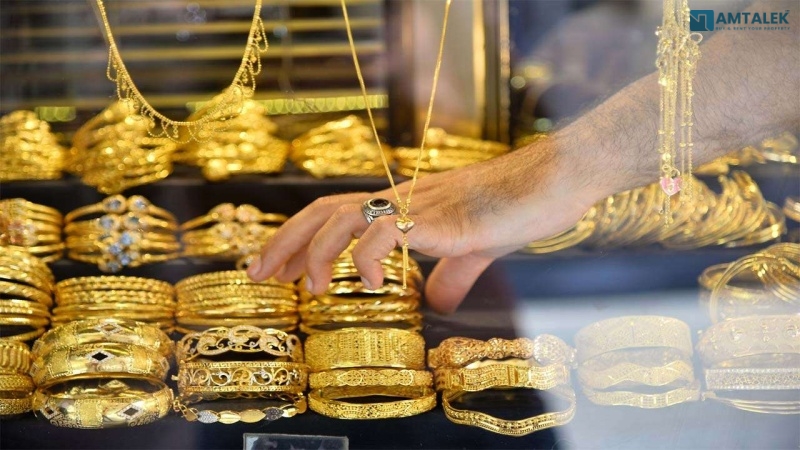
Gold price in Egypt Thursday 11/06/2026
Gold
Share on
Copy Link
Download Options
Gold Price in Egypt Today, Thursday 11/06/2026
As the Egyptian market opened on Thursday, June 11, 2026, gold prices exhibited a dynamic movement, reflecting a blend of local economic indicators and international market trends. This daily gold price service, meticulously compiled and presented by Amtalek, aims to provide comprehensive insights for investors, traders, and the general public on the precious metal's performance within the local economy. Today's figures offer a crucial snapshot for those looking to understand the current valuation of gold across various carats, from the highly sought-after 24-carat to the widely accessible 18-carat, alongside the price of a gold pound and the international Troy Ounce.
Gold Prices in Egyptian Market Today
The price of gold in Egypt is influenced by a multitude of factors, resulting in variations not only between different carats but also across various market conditions throughout the day. Investors and consumers alike keenly watch these fluctuations, as gold remains a traditional safe haven and a significant component of investment portfolios in the region. The prices presented below represent the latest updates from the Egyptian market for buying and selling gold.
| العيار | الشراء (جنيه مصري) | البيع (جنيه مصري) |
|---|---|---|
| ذهب عيار 24 | 6937 | 6903 |
| ذهب عيار 22 | 6359 | 6328 |
| ذهب عيار 21 | 6070 | 6040 |
| ذهب عيار 18 | 5203 | 5177 |
| ذهب عيار 12 | 3468 | 3452 |
| أونصة الذهب (Troy Ounce) | 215765 | 214707 |
| جنيه الذهب (8 جرام عيار 21) | 48560 | 48320 |
Highest and Lowest Gold Prices Today
An analysis of today's gold prices in the Egyptian market reveals a clear hierarchy based on carat purity. Unsurprisingly, 24-carat gold stands as the highest priced, with a buying price of 6937 EGP per gram and a selling price of 6903 EGP. This reflects its status as the purest form of gold available in the market, often preferred for investment purposes due to its higher intrinsic value.
Conversely, 12-carat gold registers the lowest price point, trading at 3468 EGP for buying and 3452 EGP for selling. This lower valuation is attributed to its significantly reduced gold content, making it more accessible for decorative items where durability and design often take precedence over pure gold content.
The most commonly traded carat, 21-carat gold, which is widely popular for jewelry and investment in Egypt, is priced at 6070 EGP for buying and 6040 EGP for selling. The difference between 24-carat and 21-carat gold per gram is substantial, approximately 867 EGP for buying, highlighting the premium associated with higher purity. Similarly, 18-carat gold, another popular choice for jewelry, is noted at 5203 EGP for buying and 5177 EGP for selling, presenting a difference of around 867 EGP compared to 21-carat gold.
Beyond per-gram prices, the table also provides insights into larger denominations. A Troy Ounce of gold is priced at 215765 EGP for buying and 214707 EGP for selling, representing the international benchmark. For local investors, the Gold Pound (8 grams of 21-carat gold) is a key indicator, currently trading at 48560 EGP for buying and 48320 EGP for selling. These figures underscore the significant investment required for larger gold holdings and reflect the overall market sentiment towards the precious metal.
Factors Affecting Gold Prices in Egypt
Gold prices in Egypt are not isolated from global and local economic dynamics. Several interconnected factors consistently influence its valuation, leading to the daily fluctuations observed in the market.
USD/EGP Exchange Rate
The exchange rate between the US Dollar and the Egyptian Pound is perhaps the most critical determinant of gold prices in Egypt. Since gold is primarily traded internationally in US Dollars, any depreciation of the Egyptian Pound against the Dollar directly translates to higher gold prices in local currency terms, even if the global dollar price of gold remains constant. Conversely, an appreciation of the EGP would make gold cheaper. This makes gold a popular hedge against local currency devaluation.
Global Gold Market Trends
International gold prices, often referred to as spot prices, are set by major trading hubs and global demand/supply dynamics. Events such as economic data releases from major economies (e.g., US inflation or employment figures), statements from central banks like the Federal Reserve, or shifts in investor sentiment towards riskier assets all impact the global price of gold. Egyptian gold prices typically track these international movements, adjusted for the local exchange rate and domestic market conditions.
Central Bank Policies
Monetary policies enacted by the Central Bank of Egypt (CBE) play a significant role. Interest rate decisions, for instance, can influence the attractiveness of holding gold versus interest-bearing assets like bank deposits or government bonds. Higher interest rates might make gold less appealing as it does not yield interest, potentially leading to a decrease in local demand. The CBE's management of liquidity and foreign exchange reserves also indirectly affects the EGP's stability, thereby impacting gold prices.
Inflation and Economic Conditions
Gold has long been considered a traditional hedge against inflation. When inflation rates are high, the purchasing power of fiat currencies erodes, making tangible assets like gold more attractive to investors seeking to preserve wealth. In periods of economic uncertainty or downturns, investors often flock to gold as a safe haven, driving up demand and prices. Egypt's specific inflation rates and overall economic growth outlook heavily influence local investment decisions in gold.
International Demand and Supply
The balance of global demand and supply for gold significantly impacts its price. Factors influencing demand include jewelry consumption, industrial use, and investment demand (ETFs, bars, coins). Supply is determined by mine production, recycling, and central bank sales. Any imbalance, such as a surge in investment demand during global crises or a disruption in mining operations, can send ripples through the international market, which are then reflected in Egyptian prices.
Geopolitical Tensions
Global and regional geopolitical instability often triggers a flight to safety, with investors seeking refuge in assets perceived as secure, such as gold. Conflicts, political uncertainties, trade wars, or major international crises tend to boost gold's appeal as a safe-haven asset, driving up its price. Given Egypt's strategic location and interconnectedness with global events, geopolitical developments can swiftly influence local gold market sentiment and prices.
Gold Price Forecast
Looking ahead, the gold market in Egypt is expected to remain sensitive to both internal and external pressures. The short-term outlook suggests continued volatility, primarily driven by the evolving global economic landscape and the local currency's performance against major international currencies. Should global inflationary pressures persist or geopolitical tensions escalate, gold's appeal as a safe haven is likely to strengthen, potentially leading to an upward trend in prices in the coming days.
Conversely, any significant strengthening of the Egyptian Pound or a sustained period of global economic stability and rising interest rates could temper gold's upward momentum. Domestic demand patterns, influenced by local economic sentiment and investment alternatives, will also play a crucial role. Investors are advised to monitor these key indicators closely, as the market is poised for continued responsiveness to macroeconomic shifts and international developments in the near future.
Latest News
No news available