
Share this Article
Share this Article
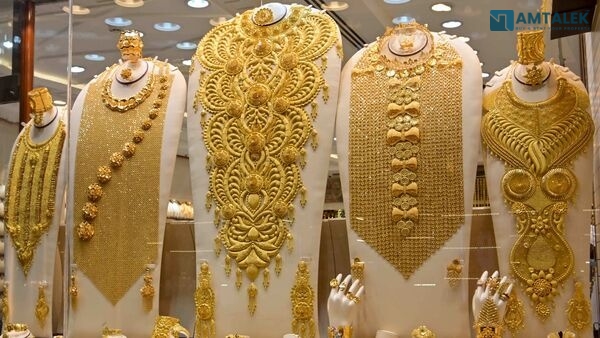
Gold price in Egypt Thursday 18/06/2026
Gold
Share on
Copy Link
Download Options
Gold price in Egypt Thursday 18/06/2026
Thursday 18/06/2026
The Egyptian gold market experienced a dynamic day of trading on Thursday, 18th June 2026, with prices reflecting a complex interplay of local and international economic indicators. Investors and consumers alike are closely monitoring the precious metal's performance, as gold continues to serve as a crucial hedge against inflation and economic uncertainty in the region. This daily gold price service is proudly provided by Amtalek, ensuring timely and accurate information for our valued readers.
Today's movements in gold prices across various carats highlight the ongoing volatility influenced by global market trends, the strength of the Egyptian Pound against major currencies, and domestic demand. Understanding these fluctuations is key for anyone looking to buy, sell, or invest in gold in Egypt. The market opened with a cautious sentiment, but as the day progressed, specific carats showed distinct patterns, indicating underlying pressures and opportunities within the sector.
The precious metal's role in the Egyptian economy extends beyond mere investment; it is deeply embedded in cultural practices, from weddings to savings. Therefore, daily price updates are not just financial news but also a reflection of broader societal and economic health. Amtalek remains committed to delivering comprehensive coverage, enabling informed decisions for all market participants.
Gold Prices in Egyptian Market Today
Gold prices in the Egyptian market are subject to daily adjustments, varying significantly based on the carat (purity) of the gold, local supply and demand dynamics, and global market influences. Consumers and investors typically refer to prices for different carats, such as 24K, 22K, 21K, 18K, and 12K, as well as the price of a gold ounce and the popular 8-gram gold pound. These variations reflect the different applications and intrinsic values of each gold type.
The prices listed below represent the latest updates from the Egyptian market for Thursday, 18th June 2026, offering a snapshot of the current buying and selling rates. It is important to note that these prices can fluctuate throughout the day and may vary slightly between different jewelers and regions due to operational costs and local market conditions.
| العيار | الشراء (جنيه مصري) | البيع (جنيه مصري) |
|---|---|---|
| ذهب عيار 24 | 7017 | 6971 |
| ذهب عيار 22 | 6432 | 6390 |
| ذهب عيار 21 | 6140 | 6100 |
| ذهب عيار 18 | 5263 | 5228 |
| ذهب عيار 12 | 3508 | 3486 |
| أونصة الذهب (Troy Ounce) | 218253 | 216822 |
| جنيه الذهب (8 جرام عيار 21) | 49120 | 48800 |
Highest and Lowest Gold Prices Today
An analysis of today's gold prices in the Egyptian market reveals a clear hierarchy based on purity, with 24-carat gold naturally commanding the highest value due to its near-pure composition. As of Thursday, 18th June 2026, the buying price for 24-carat gold stands at 7017 EGP per gram, reflecting its premium status among investors and those seeking the purest form of the metal.
Conversely, 12-carat gold, which contains a lower percentage of pure gold and a higher proportion of other metals, recorded the lowest price per gram at 3508 EGP for buying. This significant difference underscores the importance of caratage in determining gold's market value. The spread between 24K and 12K gold highlights the diverse range of products available in the market, catering to different budgets and preferences.
Intermediate carats like 21K and 18K gold also show distinct pricing. 21-carat gold, a popular choice for jewelry and investment in Egypt, is priced at 6140 EGP for buying, while 18-carat gold, often favored for its durability and intricate designs, is at 5263 EGP. The difference between 21K and 18K gold is approximately 877 EGP per gram, indicating the market's valuation of purity even within commonly used jewelry carats.
Beyond gram prices, the market also tracks larger denominations. A Troy Ounce of gold (approximately 31.1 grams) is valued at 218253 EGP for buying, offering a benchmark for larger-scale investments. The Gold Pound, which typically contains 8 grams of 21-carat gold, is priced at 49120 EGP for buying. These larger units are often preferred by serious investors looking to store wealth, given their standardized weight and purity.
The buying and selling prices also exhibit a consistent spread, with the selling price always slightly lower than the buying price. For 24-carat gold, the selling price is 6971 EGP, a difference of 46 EGP from the buying price. Similarly, for 21-carat gold, the selling price is 6100 EGP, a 40 EGP difference. This spread represents the margin for jewelers and traders, covering their operational costs and profit.
Factors Affecting Gold Prices in Egypt
Gold prices in Egypt are influenced by a confluence of local and international economic factors, making the market highly sensitive to various geopolitical and financial developments. Understanding these underlying drivers is crucial for predicting future price movements and making informed investment decisions.
USD/EGP Exchange Rate
Perhaps the most significant local factor is the exchange rate between the US Dollar and the Egyptian Pound. Since gold is primarily traded in US dollars on international markets, a depreciation of the Egyptian Pound against the dollar directly translates to higher local gold prices when converted. This inverse relationship means that as the EGP weakens, the cost of importing gold and its price for local consumers tends to rise, even if the global dollar price of gold remains constant. Therefore, any policy or economic event affecting the EGP's value will have a direct and immediate impact on the domestic gold market.
Global Gold Market Trends
The Egyptian gold market does not operate in isolation. It is intricately linked to global gold market trends, particularly the spot price of gold on major exchanges like COMEX and the London Bullion Market. Factors such as global economic growth forecasts, interest rate decisions by major central banks (like the US Federal Reserve), and shifts in investor sentiment towards riskier assets or safe havens, all play a role. When global gold prices rise due to international demand or uncertainty, Egyptian prices typically follow suit, albeit with the local currency conversion factor applied.
Central Bank Policies
The monetary policies enacted by the Central Bank of Egypt (CBE) significantly impact the local gold market. Changes in interest rates, for instance, can make holding gold more or less attractive compared to interest-bearing assets like bank deposits. Higher interest rates might reduce the appeal of non-yielding gold, while lower rates could boost its attractiveness. Additionally, the CBE's management of foreign exchange reserves and its broader economic policies aimed at controlling inflation or stimulating growth also indirectly affect gold's value.
Inflation and Economic Conditions
Gold is widely regarded as a traditional hedge against inflation. When the cost of living rises and the purchasing power of the Egyptian Pound erodes, investors often flock to gold as a store of value. This increased demand during inflationary periods pushes prices higher. Conversely, in periods of economic stability and low inflation, gold's appeal as a safe haven might diminish, leading to softer demand and potentially lower prices. The overall health and stability of the Egyptian economy, therefore, are critical determinants of local gold prices.
International Demand and Supply
The global balance of gold demand and supply also has a trickle-down effect on Egypt. Factors such as worldwide gold mining output, central bank gold purchases (or sales), industrial demand, and global jewelry consumption all contribute to the international price. Any significant imbalance, such as a major discovery of gold reserves or a surge in demand from large economies like India and China, can impact global prices, which then ripple through to the Egyptian market.
Geopolitical Tensions
Periods of geopolitical instability, regional conflicts, or major international crises often trigger a flight to safety among investors. Gold, with its perception as a safe-haven asset, typically sees increased demand during such times, leading to price surges. As Egypt is situated in a geopolitically sensitive region, international and regional tensions can quickly translate into heightened local demand for gold, pushing up prices as investors seek to protect their wealth from uncertainty.
Gold Price Forecast
Looking ahead, the gold market in Egypt is expected to remain under the influence of the same key factors that shaped today's trading. For the coming days, the short-term outlook suggests continued sensitivity to the USD/EGP exchange rate, which remains a pivotal determinant of local prices. Any significant movements in the Pound's value, whether due to government policy or broader economic pressures, will likely dictate the immediate direction of gold.
Globally, investor sentiment will be closely watching for cues from major central banks regarding interest rate trajectories. A more hawkish stance from the US Federal Reserve, for instance, could strengthen the dollar and potentially temper global gold prices, which might, in turn, exert downward pressure on local Egyptian prices if the EGP remains stable. Conversely, a dovish pivot or renewed concerns about global economic growth could bolster gold's safe-haven appeal.
Domestically, inflation trends and the overall economic sentiment in Egypt will continue to play a crucial role. If inflationary pressures persist or intensify, local demand for gold as a hedge is likely to remain robust, providing a floor for prices. Geopolitical developments, both regionally and internationally, will also be closely monitored, as any escalation could swiftly trigger increased demand for gold as a safe haven. Investors and consumers are advised to stay informed about these macroeconomic shifts to navigate the market effectively in the short to medium term.
Latest News
No news available