
Share this Article
Share this Article
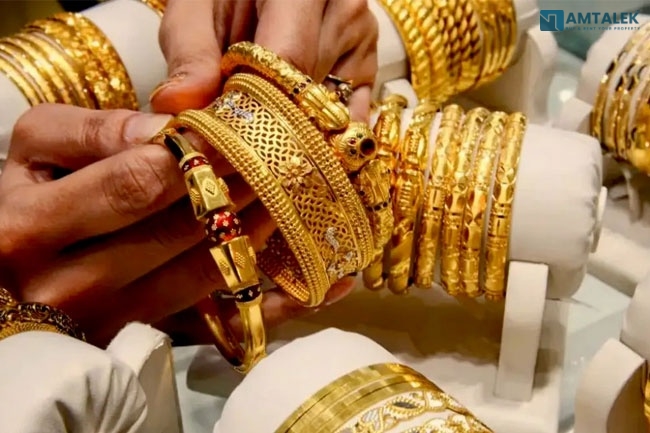
Gold price in Egypt Tuesday 16/06/2026
Gold
Share on
Copy Link
Download Options
Gold price in Egypt Tuesday 16/06/2026
Tuesday 16/06/2026
The Egyptian gold market opened today, Tuesday, June 16, 2026, with a keen eye on global trends and local economic indicators. Gold prices in Egypt are a critical benchmark for investors and consumers alike, reflecting a blend of international spot prices and domestic currency valuation. This daily service, provided by Amtalek, offers a comprehensive overview of the precious metal's performance, helping individuals make informed decisions in a dynamic economic environment.
Today's market activity shows a continuation of the trends observed in recent sessions, with various carats exhibiting specific price points. The stability or fluctuation of the Egyptian Pound against major foreign currencies, particularly the US Dollar, plays a pivotal role in shaping the local gold landscape. Furthermore, global economic sentiment, central bank policies, and geopolitical developments all contribute to the intricate pricing mechanism of gold, a universally recognized safe-haven asset.
Investors are closely monitoring these factors as they navigate the complexities of the Egyptian economy. The local demand for gold, driven by both investment and traditional purchasing, remains a significant component influencing daily price movements. Understanding these underlying dynamics is essential for anyone involved in the gold market, from large-scale investors to individual buyers.
Gold Prices in Egyptian Market Today
Gold prices in the Egyptian market are not uniform but rather vary significantly based on the purity of the gold, commonly referred to as carats. Each carat represents a different proportion of pure gold, with 24-carat being the purest form and lower carats containing a higher percentage of other metals, typically copper or silver, to enhance durability. This distinction is crucial for both buyers and sellers, as it directly impacts the value and application of the gold product.
The daily prices are influenced by a multitude of factors, including the global price of an ounce of gold, the exchange rate of the Egyptian Pound against the US Dollar, and local supply and demand dynamics. These elements combine to create the daily pricing structure seen across different carats, from the highly sought-after 24-carat to the more common 21-carat and 18-carat used in jewelry. The following table provides the updated gold prices for various carats in the Egyptian market today:
| العيار | الشراء (جنيه مصري) | البيع (جنيه مصري) |
|---|---|---|
| ذهب عيار 24 | 7160 | 7126 |
| ذهب عيار 22 | 6563 | 6532 |
| ذهب عيار 21 | 6265 | 6235 |
| ذهب عيار 18 | 5370 | 5344 |
| ذهب عيار 12 | 3580 | 3563 |
| أونصة الذهب (Troy Ounce) | 222701 | 221643 |
| جنيه الذهب (8 جرام عيار 21) | 50120 | 49880 |
Highest and Lowest Gold Prices Today
Analyzing the provided table for today, Tuesday, June 16, 2026, it is clear that gold prices in Egypt directly correlate with the carat purity. As expected, Gold Carat 24 stands as the highest-priced option, with a buying price of 7160 EGP per gram and a selling price of 7126 EGP per gram. This is due to its status as the purest form of gold available in the market.
Conversely, Gold Carat 12 registers as the lowest-priced carat, with a buying price of 3580 EGP and a selling price of 3563 EGP per gram. The substantial difference between Carat 24 and Carat 12 underscores the impact of purity on value, with Carat 12 containing a significantly higher proportion of alloying metals.
The most popular carat for jewelry in Egypt, Gold Carat 21, is priced at 6265 EGP for buying and 6235 EGP for selling. This places it comfortably between the highest and lowest carats, offering a balance of purity and durability. The difference between Carat 24 and Carat 21 is notable, with Carat 24 being approximately 895 EGP higher per gram in buying price. Similarly, Carat 21 is about 895 EGP higher than Carat 18 (5370 EGP buying price), illustrating a consistent premium for higher purity levels.
Beyond grams, the table also provides prices for larger units. A Troy Ounce of Gold, a standard international measure, is priced at 222701 EGP for buying and 221643 EGP for selling. The Gold Pound, which typically contains 8 grams of 21-carat gold, is listed at a buying price of 50120 EGP and a selling price of 49880 EGP. These larger units offer different investment avenues and bulk purchasing options, reflecting the aggregate value of their constituent gold content.
Factors Affecting Gold Prices in Egypt
Gold prices in Egypt are influenced by a complex interplay of local and global economic factors. Understanding these drivers is crucial for anticipating market movements and making informed investment decisions.
USD/EGP Exchange Rate
One of the most significant determinants of local gold prices is the exchange rate between the US Dollar and the Egyptian Pound. Gold is primarily traded in US Dollars on international markets. Therefore, when the Egyptian Pound weakens against the Dollar, the cost of importing gold in EGP increases, leading to higher local gold prices. Conversely, a stronger EGP can make gold cheaper in local currency terms, even if the international dollar price remains stable. Fluctuations in this exchange rate are closely watched by traders and consumers alike.
Global Gold Market Trends
The international spot price of gold, which is largely influenced by global supply and demand, interest rate expectations from central banks like the U.S. Federal Reserve, and overall global economic health, directly impacts Egyptian prices. A rise in global gold prices, driven by factors such as inflation concerns or economic uncertainty in major economies, will typically translate into higher prices in Egypt, assuming the USD/EGP rate remains constant. Investors often look at global trends as a primary indicator for future local price movements.
Central Bank Policies
The monetary policies enacted by the Central Bank of Egypt (CBE) can have a profound effect on gold prices. Interest rate decisions, for instance, influence the attractiveness of holding gold versus interest-bearing assets. Higher interest rates might make bonds and savings more appealing, potentially reducing demand for gold. Additionally, any measures taken by the CBE to manage inflation or stabilize the local currency will indirectly impact the perceived value and cost of gold within the country.
Inflation and Economic Conditions
Gold has historically served as a hedge against inflation and economic instability. In periods of high inflation or economic uncertainty within Egypt, individuals often turn to gold as a safe store of value to protect their purchasing power. This increased local demand can push prices upwards. Conversely, a stable economic outlook and controlled inflation might reduce the urgency to invest in gold, potentially dampening demand and prices.
International Demand and Supply
The balance of global demand and supply for gold plays a critical role. Factors such as mining output, central bank gold reserves, demand for jewelry, and industrial use globally all contribute. Strong international demand, particularly from major gold-consuming nations or central banks increasing their reserves, can drive up global prices, which then ripple into the Egyptian market. Conversely, an oversupply or reduced global demand could exert downward pressure.
Geopolitical Tensions
Gold's status as a safe-haven asset means that geopolitical instability, conflicts, or major international crises often lead to an increase in its price. When global tensions rise, investors typically flock to assets perceived as secure, and gold is a prime example. This flight to safety can cause sharp spikes in international gold prices, which are then reflected in the local Egyptian market as investors seek refuge from uncertainty.
Gold Price Forecast
Looking ahead, the gold market in Egypt is expected to remain sensitive to both international developments and domestic economic conditions. Given the current global economic landscape, which presents a mix of inflationary pressures and ongoing geopolitical uncertainties, international gold prices may see continued volatility but with an underlying upward bias as investors seek safety.
Locally, the trajectory of the Egyptian Pound against the US Dollar will be a critical factor. Any significant devaluation or revaluation could lead to noticeable shifts in local gold prices, irrespective of global movements. The Central Bank of Egypt's upcoming policy decisions regarding interest rates and currency management will also provide important cues for the market.
For the coming days, a period of relative stability with minor fluctuations could be observed, barring any major global economic shocks or significant domestic policy changes. Investors are advised to stay informed on global economic reports, central bank announcements, and local currency movements to best navigate the Egyptian gold market.
Latest News
No news available