
Share this Article
Share this Article
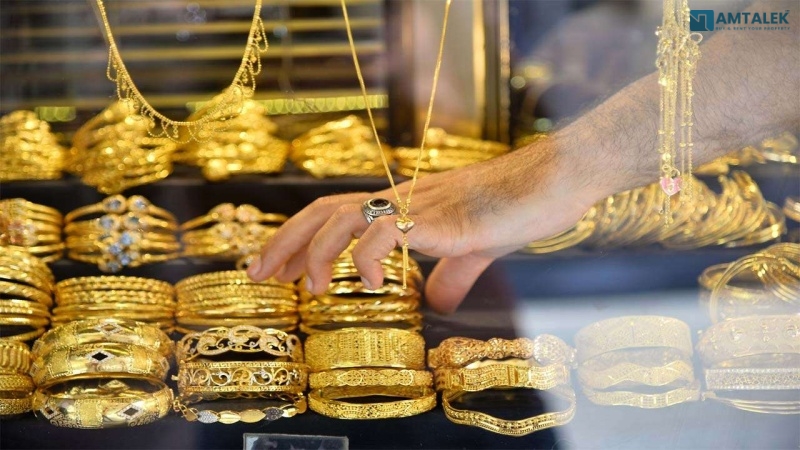
Gold price in Egypt Tuesday 23/06/2026
Gold
Share on
Copy Link
Download Options
Gold price in Egypt Tuesday 23/06/2026
Tuesday 23/06/2026
The Egyptian gold market experienced a day of notable stability with minor fluctuations on Tuesday, June 23, 2026, as investors and consumers closely monitored both local economic indicators and global market dynamics. This daily gold price service, provided by Amtalek, aims to offer comprehensive insights into the precious metal's performance, helping individuals make informed decisions in a constantly evolving financial landscape. Today's prices reflect a delicate balance between a strengthening US dollar on the international stage and domestic factors influencing the Egyptian pound, creating a nuanced environment for gold traders and buyers alike.
Gold Prices in Egyptian Market Today
Gold prices in the Egyptian market are subject to continuous shifts, reflecting a blend of international spot rates, the local exchange rate of the Egyptian Pound against major currencies, and domestic demand and supply dynamics. The value of gold is primarily determined by its purity, commonly measured in carats, with higher caratage signifying greater gold content and thus a higher price per gram. Below is a detailed breakdown of gold prices across various carats in Egypt for today, Tuesday, June 23, 2026, showcasing both buying and selling rates to provide a clear picture for market participants.
| العيار | الشراء (جنيه مصري) | البيع (جنيه مصري) |
|---|---|---|
| ذهب عيار 24 | 6789 | 6766 |
| ذهب عيار 22 | 6223 | 6202 |
| ذهب عيار 21 | 5940 | 5920 |
| ذهب عيار 18 | 5092 | 5074 |
| ذهب عيار 12 | 3394 | 3383 |
| أونصة الذهب (Troy Ounce) | 211162 | 210446 |
| جنيه الذهب (8 جرام عيار 21) | 47520 | 47360 |
Highest and Lowest Gold Prices Today
An analysis of today's gold prices in the Egyptian market clearly illustrates the impact of purity and weight on value. Carat 24 gold, representing the highest purity, commanded the highest buying price per gram at 6789 EGP, a testament to its intrinsic value for serious investors.
At the other end of the spectrum, Carat 12 gold, with its comparatively lower gold content, registered the lowest buying price per gram at 3394 EGP. This type is often preferred for specific jewelry applications where durability and affordability are key, demonstrating a significant price divergence from its purer counterparts.
Carat 21, widely popular in Egypt for both jewelry and investment, was priced at 5940 EGP for buying, while Carat 18, favored for its workability in intricate designs, stood at 5092 EGP. These carats represent a practical balance, appealing to a broad consumer base.
For larger investments, a Troy Ounce of gold (approximately 31.1 grams) reached 211162 EGP for buying, aligning with international pricing. The traditional Egyptian Gold Pound (8 grams of Carat 21 gold) was quoted at 47520 EGP for buying. These units remain popular investment choices, reflecting stable valuations.
The consistent spread between buying and selling prices across all carats indicates an active and healthy market, a crucial detail for investors to consider during transactions.
Factors Affecting Gold Prices in Egypt
The price of gold in Egypt is a complex interplay of various local and international economic forces. Understanding these factors is crucial for anyone looking to invest in or trade the precious metal.
USD/EGP Exchange Rate
The exchange rate between the US Dollar and the Egyptian Pound is a primary driver of local gold prices. As gold is priced globally in US Dollars, a weakening EGP makes gold more expensive in local currency, even if the international dollar price remains constant. Conversely, a stronger EGP could lead to lower local gold prices, underscoring the vital role of the Central Bank of Egypt's foreign exchange policies.
Global Gold Market Trends
Egyptian gold prices are directly linked to global market trends. International demand, supply from major mining regions, and speculative trading on commodity exchanges all influence the international spot price. Global geopolitical events, interest rate expectations from central banks like the U.S. Federal Reserve, and overall global economic health directly impact these benchmarks, which then filter into local Egyptian prices.
Central Bank Policies
The monetary policies of the Central Bank of Egypt (CBE) significantly impact gold's investment appeal. Higher interest rates on EGP-denominated deposits or treasury bills can divert investment towards fixed-income assets, potentially reducing gold demand. Conversely, lower rates or concerns over local currency stability might increase gold's attractiveness as a safe-haven asset, pushing prices higher.
Inflation and Economic Conditions
Gold's historical role as a hedge against inflation is particularly relevant. High inflation erodes purchasing power, driving investors towards tangible assets like gold. Egypt's economic conditions, including inflation rates, GDP growth, and consumer confidence, directly influence local gold demand. Economic uncertainty frequently boosts demand for gold, contributing to price increases.
International Demand and Supply
Beyond investment, global demand for gold in jewelry, industrial uses, and central bank reserves also affects its price. Significant shifts in these demand sectors or disruptions in the supply chain (e.g., mining output fluctuations) can create global ripples, impacting local Egyptian prices. A robust global economy may boost jewelry demand, while instability could increase investment in bullion.
Geopolitical Tensions
Periods of heightened geopolitical tension or global crises often lead to a surge in gold prices. Investors typically seek gold as a safe haven during uncertainty, perceiving it as a stable store of value amidst political and economic instability. Events in the Middle East, broader global conflicts, or significant domestic political developments can all trigger safe-haven buying, leading to upward price movements.
Gold Price Forecast
Looking ahead, the gold market in Egypt is expected to remain highly sensitive to a confluence of factors. On the international front, the trajectory of the US dollar and global interest rate expectations will continue to be primary drivers. Should the US Federal Reserve signal a more hawkish stance, or if the dollar strengthens further, international gold prices might face downward pressure, which could eventually reflect in the Egyptian market.
Domestically, the stability of the Egyptian Pound against major currencies and the Central Bank's monetary policy decisions will be paramount. Any significant depreciation of the EGP or continued high inflation could sustain or even boost local demand for gold as a hedge, potentially offsetting global price declines. Geopolitical developments, both regionally and internationally, will also play a crucial role in shaping investor sentiment and safe-haven demand.
Given the current economic landscape, with ongoing global uncertainties and domestic policy adjustments, gold prices in Egypt are anticipated to experience moderate volatility in the short to medium term. Investors are advised to stay informed on economic news and currency movements, as these will be key indicators for future gold price trends. While gold's long-term appeal as a store of value remains strong, short-term movements will likely be dictated by the delicate balance of these influential factors.
Latest News
No news available