
Share this Article
Share this Article
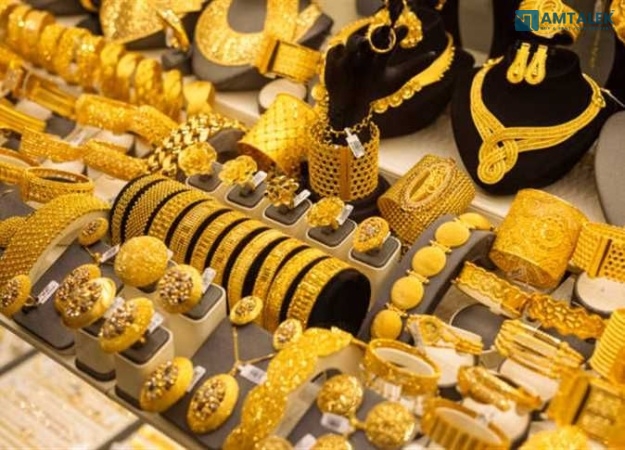
Gold price in Egypt Friday 14/08/2026
Gold
Share on
Copy Link
Download Options
As the Egyptian market opens on Friday, August 14, 2026, gold prices are experiencing notable fluctuations, continuing to capture the attention of investors and consumers alike. The precious metal, long considered a safe haven, remains a crucial indicator of economic sentiment in the region. Amtalek is pleased to provide its readers with the latest comprehensive update on gold prices in Egypt today, offering insights into the market dynamics shaping its value.
Today’s movements reflect a complex interplay of local economic indicators and global market trends. While some carats show minor adjustments, the overall trajectory points towards a cautious yet resilient market. Understanding these daily shifts is vital for anyone looking to invest, buy, or sell gold, ensuring informed decisions in a volatile environment.
Gold Prices in Egyptian Market Today
Gold prices in Egypt are subject to daily changes influenced by a multitude of factors, including global spot prices, the local supply and demand dynamics, and the exchange rate of the Egyptian Pound against major currencies. The price of gold also varies significantly depending on its purity, commonly referred to as carats. Carat 24 represents the purest form of gold, followed by Carat 22, Carat 21, and Carat 18, each catering to different investment and jewelry needs. The prices listed below reflect the latest market rates for various gold carats, as well as the price of a gold ounce and a gold pound in Egyptian Pounds.
| العيار | الشراء (جنيه مصري) | البيع (جنيه مصري) |
|---|---|---|
| ذهب عيار 24 | 7126 | 7103 |
| ذهب عيار 22 | 6532 | 6511 |
| ذهب عيار 21 | 6235 | 6215 |
| ذهب عيار 18 | 5344 | 5327 |
| ذهب عيار 12 | 3563 | 3552 |
| أونصة الذهب (Troy Ounce) | 221643 | 220928 |
| جنيه الذهب (8 جرام عيار 21) | 49880 | 49720 |
Highest and Lowest Gold Prices Today
A detailed analysis of today’s gold prices reveals distinct variations across different carats, reflecting their purity and market value. As expected, Gold Carat 24 maintains its position as the highest-priced option, with a buying price of 7126 EGP per gram. This high value is attributed to its superior purity, making it a preferred choice for investment and industrial applications.
Conversely, Gold Carat 12 stands as the lowest-priced option among the listed carats, with a buying price of 3563 EGP per gram. This lower price point is due to its reduced gold content, making it more accessible for certain jewelry items.
The most commonly traded carat in Egypt, Gold Carat 21, is priced at 6235 EGP for buying. This carat strikes a balance between purity and durability, making it highly popular for both jewelry and investment purposes among the general public. The difference between Carat 24 and Carat 21 is significant, highlighting the premium placed on higher purity.
For larger investments, a Troy Ounce of Gold is notably priced at 221643 EGP for buying, underscoring its significant value. Similarly, the Gold Pound (8 grams of Carat 21) is priced at 49880 EGP for buying, representing a substantial investment for local consumers.
The spread between buying and selling prices across all carats, though relatively narrow, is an important factor for traders and consumers to consider. This difference reflects the operational costs and profit margins of gold dealers, and it's a standard feature of the market.
Factors Affecting Gold Prices in Egypt
The daily fluctuations in Egypt's gold market are driven by a complex interplay of several key economic and geopolitical factors. Understanding these drivers is essential for predicting future movements and making informed investment decisions.
USD/EGP Exchange Rate
A primary determinant of local gold prices is the exchange rate between the US Dollar and the Egyptian Pound. International gold prices are denominated in USD, so any depreciation of the Egyptian Pound against the Dollar automatically makes gold more expensive in local currency terms. Conversely, a strengthening EGP would typically lead to lower local gold prices, assuming other factors hold steady. The Central Bank of Egypt's currency management policies are crucial here.
Global Gold Market Trends
Egypt’s gold market is not isolated from global trends. International gold prices, influenced by global inflation, interest rates in major economies (especially the US), and the strength of the US Dollar index, directly impact local prices. When global gold prices rise due to increased safe-haven demand or inflationary pressures, Egyptian prices tend to follow suit, albeit with local currency adjustments.
Central Bank Policies
The monetary policies enacted by the Central Bank of Egypt (CBE) significantly affect the investment landscape, including gold. Changes in interest rates, for instance, can alter gold's attractiveness. Higher interest rates on bank deposits might draw investors away from gold, as these assets offer a fixed income stream. Conversely, lower interest rates can make non-yielding assets like gold more appealing.
Inflation and Economic Conditions
Gold is often regarded as a traditional hedge against inflation. In periods of high inflation, where the purchasing power of fiat currencies corrodes, investors tend to flock to gold to preserve their wealth. Egypt has experienced significant inflation, making gold an attractive option for safeguarding savings. Broader economic conditions, including GDP growth and employment rates, also indirectly influence investment sentiment towards gold.
International Demand and Supply
The global balance of demand and supply for gold also impacts local prices. Factors such as industrial demand, central bank purchases, jewelry demand from major markets, and mining output all contribute to the international spot price. Any significant shift in these global dynamics can ripple through to the Egyptian market.
Geopolitical Tensions
Periods of heightened geopolitical instability or global crises typically lead to an increase in gold prices. Investors view gold as a safe-haven asset during times of uncertainty, moving capital away from riskier assets towards precious metals. Geopolitical developments in the Middle East and globally can quickly translate into increased demand and higher prices for gold in Egypt.
Gold Price Forecast
Looking ahead, the trajectory of gold prices in Egypt is likely to remain influenced by a blend of domestic economic policies and prevailing international market conditions. In the immediate term, minor fluctuations are expected as the market digests recent data and reacts to daily news. The stability of the USD/EGP exchange rate will continue to be a critical factor; any significant movement could trigger corresponding changes in local gold prices.
Globally, if inflationary pressures persist or if there's a renewed sense of economic uncertainty, gold's appeal as a safe-haven asset could strengthen, potentially pushing international prices higher. This would likely translate into upward pressure on Egyptian gold prices. Conversely, a stronger global economic recovery accompanied by rising interest rates in major economies might temper gold's allure, leading to a more stable or even slightly declining trend.
Domestically, the Central Bank's monetary policy decisions, particularly regarding interest rates, will play a pivotal role. Should the CBE opt for further rate hikes to combat inflation, the opportunity cost of holding gold might increase, potentially moderating local demand. However, given gold's historical role as a hedge against inflation in Egypt, sustained high inflation could reinforce its attractiveness despite competing investment options.
Overall, while short-term volatility cannot be ruled out, the medium-term outlook for gold in Egypt suggests continued resilience. Investors are advised to remain vigilant, closely monitoring both local economic indicators and global market sentiments to make well-informed decisions regarding their gold holdings.
This service is provided by Amtalek Realestate Platform
Latest News
No news available