
Share this Article
Share this Article
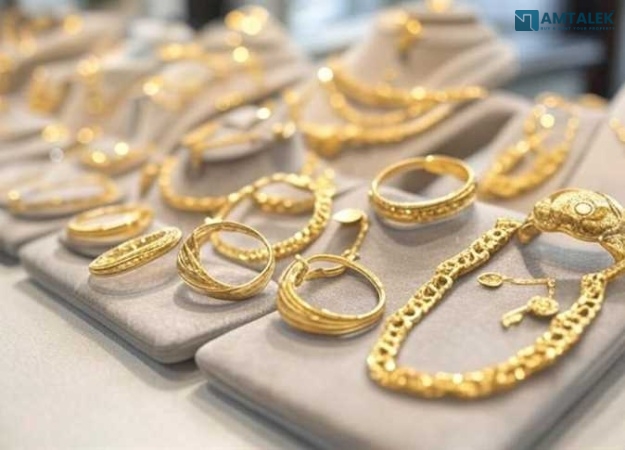
Gold price in Egypt Monday 14/09/2026
Gold
Share on
Copy Link
Download Options
Gold Price in Egypt Monday 14/09/2026
Monday 14/09/2026
The Egyptian gold market commenced the week with notable movements, as investors and consumers closely monitored the precious metal's performance amidst a dynamic economic landscape. Today, Monday 14/09/2026, gold prices in Egypt exhibited a nuanced trend, influenced by a confluence of local and international factors. This daily gold price update, provided exclusively by Amtalek, aims to offer a comprehensive overview of the market, empowering individuals with timely and accurate information to make informed decisions.
Gold continues to serve as a crucial hedge against inflation and economic uncertainties, making its price fluctuations a key indicator of market sentiment in Egypt. The current market conditions reflect ongoing adjustments to global economic cues, the strength of the Egyptian Pound against major currencies, and domestic demand patterns. As we delve deeper into today's figures, it becomes evident that both local supply-demand dynamics and broader macroeconomic forces are playing significant roles in shaping the value of gold across various carats.
Gold Prices in Egyptian Market Today
Gold prices in the Egyptian market are subject to daily variations, influenced by global market rates for the precious metal, as well as local supply and demand dynamics. The price of gold is typically quoted per gram, with variations based on its purity, commonly referred to as carats. Different carats, such as 24, 22, 21, 18, and 12, cater to diverse market segments and investment preferences. Below is a detailed breakdown of today's gold prices in Egyptian Pounds for various carats, including the price of a Troy Ounce and the popular Gold Pound.
| العيار | الشراء (جنيه مصري) | البيع (جنيه مصري) |
|---|---|---|
| ذهب عيار 24 | 7160 | 7126 |
| ذهب عيار 22 | 6563 | 6532 |
| ذهب عيار 21 | 6265 | 6235 |
| ذهب عيار 18 | 5370 | 5344 |
| ذهب عيار 12 | 3580 | 3563 |
| أونصة الذهب (Troy Ounce) | 222701 | 221643 |
| جنيه الذهب (8 جرام عيار 21) | 50120 | 49880 |
Highest and Lowest Gold Prices Today
Analyzing the provided table for Monday 14/09/2026, it is clear that gold prices vary significantly depending on the carat purity. As expected, gold of higher purity commands a higher price per gram. Today, the highest price per gram for buying gold is observed with Gold Carat 24, which stands at 7160 EGP. This carat represents the purest form of gold readily available in the market and is often preferred by investors seeking maximum intrinsic value.
Conversely, the lowest price per gram among the listed carats for buying gold is Gold Carat 12, priced at 3580 EGP. This significant difference highlights the impact of purity on pricing, with Carat 12 containing roughly half the gold content of Carat 24, reflecting a proportional price difference. The mid-range carats, such as Carat 21 and Carat 18, also show distinct pricing. Gold Carat 21, which is the most common for jewelry and the basis for the Gold Pound, is priced at 6265 EGP for buying, while Carat 18, often used for more intricate designs, is 5370 EGP.
For larger investment units, the price of a Troy Ounce of gold (approximately 31.1 grams) is 222701 EGP for buying. The popular Gold Pound, which typically contains 8 grams of 21-carat gold, is priced at 50120 EGP for buying. These figures demonstrate the various entry points and investment scales available to consumers and investors in the Egyptian gold market, with prices reflecting the underlying purity and weight of the gold product.
Factors Affecting Gold Prices in Egypt
The price of gold in Egypt is not determined in isolation; it is a complex interplay of several domestic and international economic factors. Understanding these drivers is crucial for anyone looking to invest in or simply track the precious metal.
USD/EGP Exchange Rate
One of the most significant factors influencing local gold prices is the exchange rate between the US Dollar and the Egyptian Pound. Since gold is primarily traded in US Dollars on international markets, any depreciation of the Egyptian Pound against the Dollar makes imported gold more expensive in local currency terms. Conversely, a stronger Pound would exert downward pressure on gold prices. Fluctuations in the parallel market rate, if significant, can also create discrepancies and drive local price movements independently of global rates.
Global Gold Market Trends
International gold prices, driven by global supply and demand, geopolitical stability, and the policies of major central banks like the U.S. Federal Reserve, directly impact local prices. When global gold prices rise due to increased safe-haven demand or inflationary concerns in major economies, this upward trend is typically reflected in the Egyptian market, albeit with some lag and local adjustments.
Central Bank Policies
The Central Bank of Egypt's monetary policies, particularly interest rate decisions, can indirectly affect gold prices. Higher interest rates on local deposits might make gold a less attractive investment by increasing the opportunity cost of holding a non-yield-bearing asset. Conversely, lower interest rates could encourage investors to seek alternative assets like gold for better returns or wealth preservation.
Inflation and Economic Conditions
High inflation erodes the purchasing power of fiat currency, making assets like gold more appealing as a hedge. In times of economic uncertainty or high inflation, Egyptians often turn to gold to protect their savings from devaluation. Local economic growth prospects, employment rates, and consumer confidence also play a role, influencing disposable income and investment patterns.
International Demand and Supply
Global demand for gold from central banks, investment funds, and the jewelry industry, alongside mining output and recycling rates, dictates international supply and demand dynamics. Any significant shift in these global factors, such as a major central bank increasing its gold reserves or a new large gold discovery, can have ripple effects on prices worldwide, including in Egypt.
Geopolitical Tensions
Periods of geopolitical instability, regional conflicts, or global crises often boost gold's appeal as a safe-haven asset. Investors tend to flock to gold during such times, driving up its price as they seek refuge from volatile financial markets. The Middle East and North Africa region, in particular, is sensitive to such events, and their impact can quickly translate into higher local gold prices.
Gold Price Forecast
Looking ahead, the gold market in Egypt is expected to remain under the influence of both international and domestic factors. Global gold prices are likely to continue responding to central bank monetary policies, particularly the U.S. Federal Reserve's stance on interest rates, and any significant shifts in global economic growth forecasts. Persistent inflationary pressures in major economies could provide underlying support for gold as an inflation hedge.
Domestically, the stability of the Egyptian Pound against the US Dollar will be a critical determinant. Any further depreciation could push local gold prices higher, while a strengthening Pound might temper gains. Government economic reforms and the general health of the Egyptian economy will also play a role in shaping local demand and investment sentiment. Given the current global uncertainties and ongoing local economic adjustments, gold is likely to maintain its role as a preferred store of value. Investors should anticipate continued volatility but with a general underlying resilience, especially if global safe-haven demand persists. Short-term fluctuations are probable, but the long-term outlook for gold in Egypt remains tied to its traditional role as a protector of wealth against economic headwinds.
This service is provided by Amtalek Realestate Platform
Latest News
No news available