
Share this Article
Share this Article
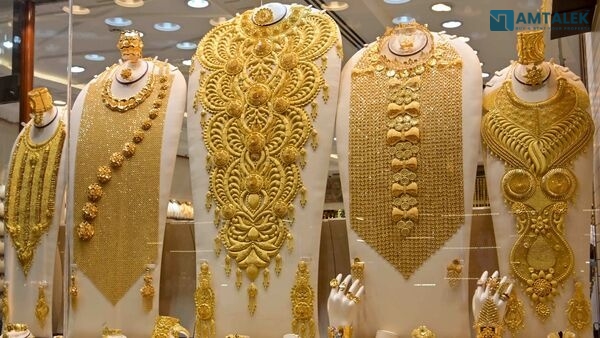
Gold price in Egypt Monday 17/08/2026
Gold
Share on
Copy Link
Download Options
Gold price in Egypt Monday 17/08/2026
Monday 17/08/2026
Today, Monday, August 17, 2026, the Egyptian gold market exhibits a dynamic trend, reflecting both domestic economic indicators and global market sentiments. Investors and consumers alike are closely monitoring the precious metal's performance as it continues to serve as a crucial hedge against inflation and economic uncertainty. This comprehensive daily gold price service is proudly provided by Amtalek, offering an in-depth analysis of the current market situation and future outlook for gold in Egypt. We delve into the nuances of local pricing, international influences, and the various factors shaping the value of gold across different carats. Understanding these dynamics is essential for making informed decisions, whether for investment, savings, or personal purchases. The market's current state is a complex interplay of the Egyptian Pound's stability, global gold benchmarks, and local supply-demand forces, all of which contribute to the daily fluctuations observed.
Gold Prices in Egyptian Market Today
The price of gold in the Egyptian market today, Monday, August 17, 2026, shows variations across different carats, reflecting the purity levels and market demand for each. These prices are influenced by a combination of factors, including the global price of gold, the exchange rate of the Egyptian Pound against major currencies, and local supply and demand dynamics. Investors and consumers typically refer to these prices to gauge the value of their assets or to plan their purchases. The market typically distinguishes between various carats, with 24-carat gold being the purest and thus the most expensive per gram, followed by 22-carat, 21-carat, and 18-carat gold, which are commonly used for jewelry. The following table provides a detailed breakdown of gold prices in Egyptian Pounds for both buying and selling.
| العيار | الشراء (جنيه مصري) | البيع (جنيه مصري) |
|---|---|---|
| ذهب عيار 24 | 7131 | 7108 |
| ذهب عيار 22 | 6537 | 6516 |
| ذهب عيار 21 | 6240 | 6220 |
| ذهب عيار 18 | 5348 | 5331 |
| ذهب عيار 12 | 3566 | 3554 |
| أونصة الذهب (Troy Ounce) | 221799 | 221084 |
| جنيه الذهب (8 جرام عيار 21) | 49920 | 49760 |
Highest and Lowest Gold Prices Today
An analysis of today's gold prices reveals distinct patterns across different purities. As expected, 24-carat gold, representing the highest purity available, commands the highest price per gram in the Egyptian market. Today, the buying price for 24-carat gold stands at 7131 EGP, while the selling price is 7108 EGP. This purity is primarily sought by investors for its intrinsic value and is often used in bullion and investment instruments.
Conversely, 12-carat gold registers as the lowest priced option among the listed carats, with a buying price of 3566 EGP and a selling price of 3554 EGP. This lower carat contains a higher proportion of other metals, making it less expensive per gram and typically less common for investment purposes, though it might be used in specific jewelry designs.
The most widely traded and popular purity for jewelry in Egypt, 21-carat gold, is priced at 6240 EGP for buying and 6220 EGP for selling. This carat strikes a balance between purity and durability, making it a preferred choice for consumers. The difference between 24-carat and 21-carat gold for buying is significant, approximately 891 EGP per gram, highlighting the premium associated with higher purity.
18-carat gold, another common choice for jewelry due to its strength and suitability for intricate designs, is priced at 5348 EGP for buying and 5331 EGP for selling. The price gap between 21-carat and 18-carat gold is around 892 EGP per gram (buying price), reflecting the varying gold content.
Beyond per-gram prices, the market also tracks the price of a Troy Ounce of gold, which is a standard international measure. Today, a Troy Ounce is valued at 221799 EGP for buying and 221084 EGP for selling. The Gold Pound, which typically contains 8 grams of 21-carat gold, is a popular investment vehicle in Egypt. Its buying price today is 49920 EGP, with a selling price of 49760 EGP. These distinct price points underscore the diverse options available to investors and consumers in the Egyptian gold market, catering to different financial capacities and preferences for purity and form.
Factors Affecting Gold Prices in Egypt
The Egyptian gold market is highly sensitive to a confluence of local and international economic factors. Understanding these drivers is crucial for anticipating price movements and making informed decisions. Here are the primary influences:
USD/EGP Exchange Rate
The exchange rate between the US Dollar and the Egyptian Pound is perhaps the most significant domestic factor influencing gold prices. Since gold is primarily traded in US Dollars on international markets, a depreciation of the Egyptian Pound against the Dollar makes imported gold more expensive in local currency terms, leading to higher domestic gold prices. Conversely, a stronger Pound can lead to a decrease in local gold prices, assuming global prices remain stable. The stability or volatility of the EGP often dictates the short-term direction of gold prices in Egypt.
Global Gold Market Trends
International gold prices, set by major exchanges like the London Bullion Market Association (LBMA) and COMEX, serve as a fundamental benchmark. Factors influencing global prices include interest rate expectations from central banks (particularly the US Federal Reserve), the strength of the US Dollar index, and global economic growth forecasts. When global gold prices rise, they exert upward pressure on Egyptian gold prices, and vice versa.
Central Bank Policies
The Central Bank of Egypt's monetary policies, including interest rate decisions and foreign exchange interventions, directly impact the attractiveness of alternative investments and the stability of the Egyptian Pound. Higher interest rates might make fixed-income investments more appealing, potentially diverting funds away from gold. Policies aimed at stabilizing the EGP can also indirectly affect gold prices by altering the cost of importing gold.
Inflation and Economic Conditions
Gold has traditionally been viewed as a safe haven asset, particularly during periods of high inflation and economic uncertainty. When inflation erodes the purchasing power of fiat currencies, investors often turn to gold to preserve wealth. In Egypt, persistent inflationary pressures can significantly boost demand for gold, driving up local prices. Broader economic conditions, such as GDP growth, unemployment rates, and consumer confidence, also play a role in shaping investment sentiment towards gold.
International Demand and Supply
Global demand for gold, driven by jewelry consumption, industrial use, central bank purchases, and investment, impacts its international price. Supply-side factors, such as mining output, recycling rates, and existing stockpiles, also play a role. A surge in international demand coupled with constrained supply can lead to higher global prices, which then ripple into the Egyptian market.
Geopolitical Tensions
Periods of geopolitical instability, regional conflicts, or major international crises often lead to a flight to safety, with investors seeking refuge in assets like gold. Such events can cause sharp increases in global gold prices as risk aversion intensifies. Given Egypt's strategic location, regional geopolitical developments can have a notable, albeit sometimes indirect, impact on local market sentiment and gold prices.
Gold Price Forecast
Looking ahead, the gold market in Egypt is expected to remain under the influence of both domestic economic policy and evolving global dynamics. In the short term, the stability of the Egyptian Pound against the US Dollar will be a critical determinant. Any significant movements in the exchange rate could trigger corresponding shifts in local gold prices. Furthermore, the Central Bank of Egypt's upcoming policy decisions regarding interest rates will be closely watched, as these could affect the opportunity cost of holding non-yielding assets like gold versus interest-bearing investments.
Globally, the trajectory of inflation and the monetary policy stances of major central banks, particularly the US Federal Reserve, will continue to shape international gold benchmarks. If global inflation persists or if there's a perceived slowdown in global economic growth, gold's appeal as a safe haven asset could strengthen, pushing international prices higher. Conversely, a strong US Dollar and aggressive rate hikes could dampen gold's allure.
Given the current market conditions, a period of continued vigilance is advised for investors. While gold's long-term appeal as a store of value remains robust, short-term fluctuations are probable. Investors should monitor both local economic indicators and international market signals to anticipate future price movements. The consensus among analysts suggests that gold will likely maintain its role as a key investment, particularly as a hedge against potential economic uncertainties, but significant price surges or drops will largely depend on the interplay of the aforementioned factors.
This service is provided by Amtalek Realestate Platform
Latest News
No news available