
Share this Article
Share this Article
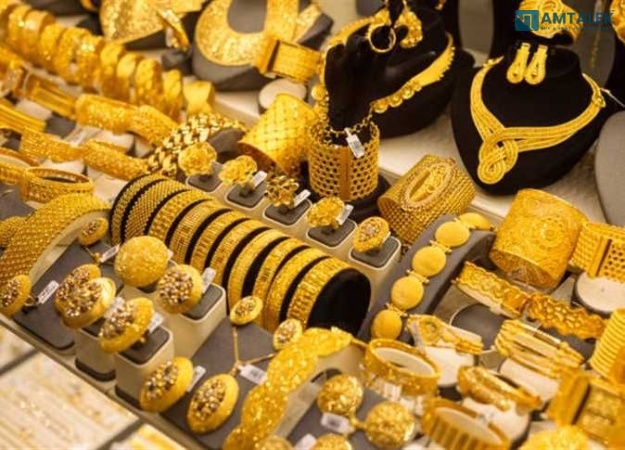
Gold price in Egypt Monday 19/10/2026
Gold
Share on
Copy Link
Download Options
Gold price in Egypt Monday 19/10/2026
Monday 19/10/2026
The Egyptian gold market commenced the week on Monday, 19th October 2026, with prices exhibiting minor shifts across various carats. This daily gold price update, a service proudly brought to you by Amtalek, aims to deliver comprehensive insights into the current market dynamics, empowering investors and consumers to make well-informed decisions. Gold consistently serves as a crucial safe-haven asset, and its movements within the local market are meticulously observed, influenced by both domestic economic indicators and overarching global trends.
As the trading day unfolds, local gold prices in Egypt are navigating a complex interplay of factors, ranging from the strength of the Egyptian Pound against major international currencies to prevailing sentiments in the global commodity markets. A thorough understanding of these forces is essential for grasping the potential trajectory of gold's value. Today’s detailed report provides a breakdown of specific carat prices, highlights the key influencing factors, and offers a concise outlook for the upcoming period.
Gold Prices in Egyptian Market Today
Gold prices in Egypt are typically quoted for different carats, which denote varying purities of the precious metal. The most commonly traded carats in the Egyptian market include 24-carat, 21-carat, and 18-carat gold, alongside the price of the gold pound and the international troy ounce. These prices are subject to daily, and at times hourly, fluctuations driven by supply and demand dynamics, currency exchange rates, and broader global market movements. Below is a detailed breakdown of gold prices per gram in the Egyptian market as of Monday, 19th October 2026:
| العيار | الشراء (جنيه مصري) | البيع (جنيه مصري) |
|---|---|---|
| ذهب عيار 24 | 7166 | 7143 |
| ذهب عيار 22 | 6569 | 6548 |
| ذهب عيار 21 | 6270 | 6250 |
| ذهب عيار 18 | 5374 | 5357 |
| ذهب عيار 12 | 3583 | 3572 |
| أونصة الذهب (Troy Ounce) | 222888 | 222172 |
| جنيه الذهب (8 جرام عيار 21) | 50160 | 50000 |
Highest and Lowest Gold Prices Today
An examination of today's gold prices reveals distinct valuations across different carats, directly reflecting their purity levels and prevailing market demand. As anticipated, 24-carat gold, representing the purest form readily available in the market, commands the highest price today, with a buying price of 7166 EGP per gram and a selling price of 7143 EGP. This carat is frequently favored for investment purposes due to its superior purity.
Conversely, 12-carat gold is recorded as the lowest priced carat among those listed, with a buying price of 3583 EGP per gram and a selling price of 3572 EGP. This more accessible price point is a direct consequence of its reduced gold content, making it suitable for specific types of jewelry or industrial applications where lower purity is acceptable.
The widely popular 21-carat gold, a cornerstone for jewelry in Egypt, is priced at 6270 EGP for buying and 6250 EGP for selling. The notable difference between 24-carat and 21-carat gold underscores the premium associated with higher purity, while 18-carat gold, frequently employed for intricate designs, stands at 5374 EGP for buying and 5357 EGP for selling.
Beyond per-gram measurements, the market also closely tracks the price of a Troy Ounce of gold, which today is valued at 222888 EGP for buying and 222172 EGP for selling, reflecting its global valuation. The Gold Pound (an 8-gram unit of 21-carat gold) is priced at 50160 EGP for buying and 50000 EGP for selling, serving as a crucial indicator for local investors interested in larger, standardized gold units.
Factors Affecting Gold Prices in Egypt
The price of gold in Egypt is not solely determined by local supply and demand but is rather a complex interplay of various domestic and international economic and geopolitical factors. Understanding these influences is paramount for anyone involved in the gold market.
USD/EGP Exchange Rate
The exchange rate between the US Dollar and the Egyptian Pound stands as arguably the most significant local determinant of gold prices. Given that gold is primarily traded in US Dollars globally, a depreciation of the Egyptian Pound against the Dollar typically leads to an increase in local gold prices, making imported gold more expensive in local currency terms. Fluctuations in both official and parallel market rates can introduce substantial volatility.
Global Gold Market Trends
International gold prices, shaped by factors such as global economic stability, interest rate expectations from major central banks (particularly the US Federal Reserve), and the overall strength of the US Dollar index, exert a direct impact on the Egyptian market. A rally in global gold prices frequently translates into higher local prices, even if the Egyptian Pound maintains relative stability.
Central Bank Policies
Monetary policy decisions enacted by the Central Bank of Egypt, especially concerning interest rates and foreign exchange management, can indirectly influence gold prices. Higher interest rates on local deposits might reduce gold's attractiveness as an investment, while policies aimed at stabilizing the EGP can temper potential gold price increases.
Inflation and Economic Conditions
Gold is widely recognized as a robust hedge against inflation and economic uncertainty. During periods of elevated inflation or economic instability within Egypt, demand for gold tends to surge as individuals seek to preserve their wealth, thereby pushing prices upwards. Conversely, a stable and growing economy might diminish this safe-haven demand.
International Demand and Supply
Global demand for gold, driven by central bank purchases, jewelry consumption, technological applications, and investment, coupled with the overall supply from mining operations and recycling, significantly impacts international gold prices. Any imbalance in this global equation will inevitably ripple through to local markets such as Egypt.
Geopolitical Tensions
Escalating geopolitical tensions, whether regional or global, often trigger an increase in safe-haven buying of gold. Conflicts, political instability, or major international crises can prompt investors to flock to gold, perceiving it as a reliable store of value when other assets exhibit volatility. Egypt, situated in a strategically vital region, is particularly susceptible to such developments.
Gold Price Forecast
Looking ahead, the gold market in Egypt is anticipated to remain highly sensitive to a confluence of both domestic and international factors. In the short term, immediate price movements will likely be dictated by the daily performance of the Egyptian Pound against the US Dollar and any significant shifts in global commodity markets. Should the Egyptian Pound experience further volatility or depreciation, local gold prices could witness an upward trajectory as investors increasingly seek refuge in the precious metal.
Globally, the outlook for gold is intrinsically linked to the trajectory of inflation, the interest rate policies of major central banks, and the broader geopolitical landscape. Any indications of persistent inflation or heightened global instability could provide further impetus for gold prices. Conversely, a strengthening US Dollar or a more aggressive stance from the US Federal Reserve on interest rates could exert downward pressure on the precious metal.
For Egyptian investors and consumers, closely monitoring central bank announcements, global economic data releases, and currency market movements will be paramount. While gold is generally regarded as a long-term store of value, its short-term volatility necessitates a cautious and informed approach. Amtalek will continue to provide timely daily updates to keep you informed of these vital market developments.
This service is provided by Amtalek Realestate Platform
Latest News
No news available