
Share this Article
Share this Article
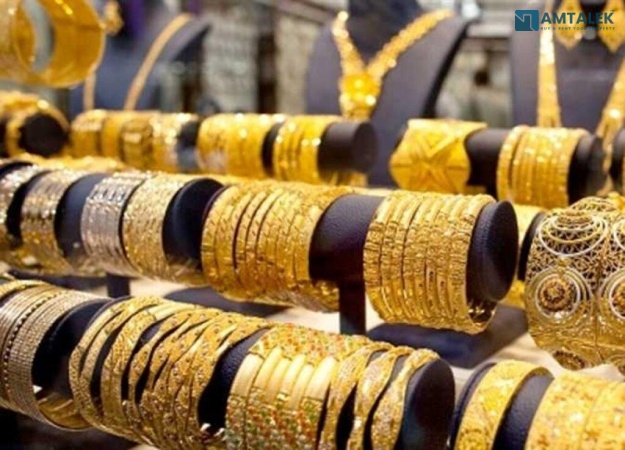
Gold price in Egypt Saturday 17/10/2026
Gold
Share on
Copy Link
Download Options
Gold price in Egypt Saturday 17/10/2026
Saturday 17/10/2026
The Egyptian gold market opens this Saturday, October 17, 2026, with a discernible shift in precious metal values, reflecting a complex interplay of local and global economic forces. This daily gold price service, provided by Amtalek, aims to offer comprehensive insights into the current market dynamics, helping investors and consumers make informed decisions. Today's prices show a nuanced picture, with some stability observed amidst underlying pressures from international markets and the domestic economic landscape. As always, gold remains a critical indicator of economic sentiment and a preferred safe-haven asset for many Egyptians.
Gold Prices in Egyptian Market Today
The price of gold in Egypt is subject to daily fluctuations, influenced by a multitude of factors, including the global price of the commodity, the exchange rate of the US dollar against the Egyptian pound, and local supply and demand dynamics. Prices also vary significantly depending on the carat (purity) of the gold, with higher carats like 24-karat naturally commanding a higher price per gram due to their greater gold content. Understanding these variations is crucial for anyone looking to buy or sell gold in the Egyptian market.
| العيار | الشراء (جنيه مصري) | البيع (جنيه مصري) |
|---|---|---|
| ذهب عيار 24 | 7143 | 7120 |
| ذهب عيار 22 | 6548 | 6527 |
| ذهب عيار 21 | 6250 | 6230 |
| ذهب عيار 18 | 5357 | 5340 |
| ذهب عيار 12 | 3572 | 3560 |
| أونصة الذهب (Troy Ounce) | 222172 | 221457 |
| جنيه الذهب (8 جرام عيار 21) | 50000 | 49840 |
Highest and Lowest Gold Prices Today
Analyzing the provided table for Saturday, October 17, 2026, reveals the natural hierarchy of gold prices based on purity. As expected, 24-karat gold, being the purest form listed, holds the highest price per gram. Today, 24-karat gold is trading at EGP 7143 for buying and EGP 7120 for selling. This reflects its premium value and is often preferred for investment and industrial applications where high purity is paramount.
Conversely, 12-karat gold represents the lowest price point among the listed carats, with a buying price of EGP 3572 and a selling price of EGP 3560. This lower price is due to its reduced gold content, making it a more accessible option for certain jewelry items where durability and affordability are prioritized over pure gold content.
The price difference between the highest (24-karat) and lowest (12-karat) gold per gram is substantial, illustrating the direct correlation between carat purity and market value. For instance, the buying price for 24-karat gold is nearly double that of 12-karat gold. This spread underscores the importance for consumers to understand the carat system when purchasing gold, as it directly impacts the investment value and the final cost.
The table also highlights the prices for an ounce of gold (Troy Ounce) and the popular Gold Pound (8 grams of 21-karat). An ounce of gold is priced at EGP 222172 for buying and EGP 221457 for selling, demonstrating the significant capital required for larger investments. The Gold Pound, a common investment vehicle in Egypt, is listed at EGP 50000 for buying and EGP 49840 for selling, reflecting its value as a tangible asset.
Factors Affecting Gold Prices in Egypt
Gold prices in Egypt are not isolated from global trends but are also heavily influenced by specific domestic economic conditions. Several key factors converge to determine the daily valuation of gold in the local market:
USD/EGP Exchange Rate
The exchange rate between the US dollar and the Egyptian pound is arguably the most dominant factor influencing local gold prices. Since gold is globally denominated in US dollars, any fluctuation in the EGP against the USD directly translates into changes in the local gold price. A depreciation of the Egyptian pound typically leads to an increase in gold prices in EGP terms, making it more expensive for local buyers, even if the international dollar price of gold remains constant.
Global Gold Market Trends
International gold prices, driven by global supply and demand, geopolitical events, and the monetary policies of major central banks (especially the US Federal Reserve), set the baseline for gold's value worldwide. Egypt, as part of the global market, reflects these trends. When global gold prices rise due to increased safe-haven demand or inflationary concerns, local prices tend to follow suit.
Central Bank Policies
The Central Bank of Egypt's monetary policies, including interest rate decisions and foreign exchange interventions, play a significant role. Higher interest rates can make holding non-yielding assets like gold less attractive compared to interest-bearing investments. Conversely, policies that lead to currency devaluation or increased liquidity can bolster gold's appeal as a store of value.
Inflation and Economic Conditions
High inflation erodes the purchasing power of fiat currencies, making gold a preferred hedge against rising prices. In times of economic uncertainty or high inflation in Egypt, demand for gold typically increases as individuals seek to preserve their wealth. The overall health and stability of the Egyptian economy, including GDP growth rates and unemployment figures, also subtly influence investor confidence in traditional assets versus gold.
International Demand and Supply
While local factors are crucial, the global balance of demand and supply for gold cannot be overlooked. Major gold-producing countries and large institutional investors globally impact the availability and price of gold. Increased industrial demand, central bank gold purchases, or reduced mining output can push international prices higher, which then filters down to the Egyptian market.
Geopolitical Tensions
Global and regional geopolitical events often trigger a flight to safety, with gold being a primary beneficiary. Conflicts, political instability, trade wars, or major international crises can cause investors to seek the perceived security of gold, driving up its price. Egypt, being located in a strategically important region, can experience heightened gold demand during such periods, even if the events are not directly related to its borders.
Gold Price Forecast
Looking ahead, the gold market in Egypt is expected to remain sensitive to both international gold price movements and domestic economic policy shifts. Given the current global economic uncertainties and persistent inflationary pressures in various economies, gold is likely to retain its appeal as a safe-haven asset. Any further depreciation of the Egyptian pound against the US dollar would exert upward pressure on local gold prices. Investors and consumers should closely monitor global interest rate decisions, especially from the US Federal Reserve, as these have a profound impact on the dollar's strength and, consequently, on international gold prices. For the coming days, a cautious outlook suggests continued volatility, with a potential for slight upward movement if global safe-haven demand persists or if there are further domestic currency adjustments. Regular monitoring of both local and international economic indicators will be key to understanding gold's trajectory.
This service is provided by Amtalek Realestate Platform
Latest News
No news available