
Share this Article
Share this Article
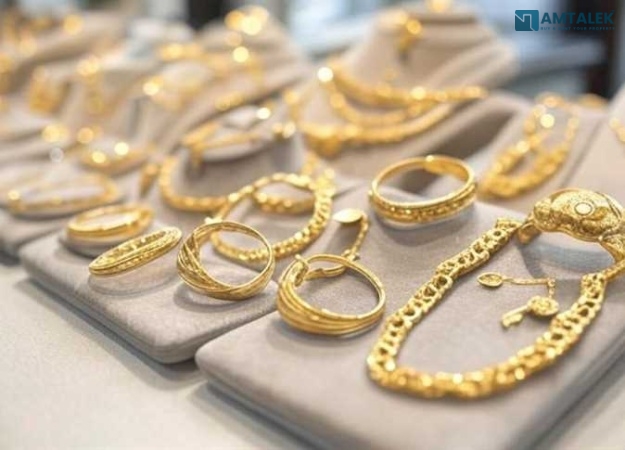
Gold price in Egypt Sunday 16/08/2026
Gold
Share on
Copy Link
Download Options
Gold price in Egypt Sunday 16/08/2026
As the Egyptian market opens on Sunday, 16th August 2026, gold prices are experiencing varied movements, reflecting the dynamic interplay of local and global economic factors. This daily gold price service is proudly provided by Amtalek, aiming to keep investors and consumers informed about the latest trends and valuations in the precious metal market. Today's movements are particularly influenced by a mix of international spot price fluctuations and domestic economic indicators, setting the stage for an intriguing trading day.
Gold remains a crucial asset for many Egyptians, serving as both a store of value and a popular investment choice amidst economic uncertainties. Understanding the daily shifts in carats and their corresponding values is essential for making informed decisions, whether for purchasing jewelry, investing in bullion, or monitoring personal wealth.
Gold Prices in Egyptian Market Today
The price of gold in Egypt is subject to constant change, influenced by a multitude of local and international economic variables. These include the global price of gold, the exchange rate of the US dollar against the Egyptian pound, and local demand and supply dynamics. The prices presented below reflect the current buying and selling rates for various gold carats, as well as the price of a Troy Ounce and the Egyptian Gold Pound, providing a comprehensive snapshot of the market today.
Investors and consumers should note that gold prices can vary slightly between different jewelers and regions across Egypt due to varying overheads and local market conditions. However, the figures provided offer a reliable benchmark for the day's trading.
| العيار | الشراء (جنيه مصري) | البيع (جنيه مصري) |
|---|---|---|
| ذهب عيار 24 | 7137 | 7114 |
| ذهب عيار 22 | 6542 | 6521 |
| ذهب عيار 21 | 6245 | 6225 |
| ذهب عيار 18 | 5353 | 5336 |
| ذهب عيار 12 | 3568 | 3557 |
| أونصة الذهب (Troy Ounce) | 221986 | 221270 |
| جنيه الذهب (8 جرام عيار 21) | 49960 | 49800 |
Highest and Lowest Gold Prices Today
Analyzing the provided table for Sunday, 16th August 2026, it is evident that gold prices vary significantly depending on the carat purity. As expected, Gold Carat 24 stands as the highest purity and consequently the most expensive, with a buying price reaching 7137 EGP per gram. This carat is often preferred for investment-grade gold bars and coins due to its high purity.
On the other end of the spectrum, Gold Carat 12 registers the lowest price point, trading at 3568 EGP per gram for buying. This lower carat content means it contains a higher proportion of other metals, making it less costly but also less pure, and thus less desirable for investment purposes, though it can be found in specialized jewelry.
The widely popular Gold Carat 21, a staple in the Egyptian market for both jewelry and investment, is priced at 6245 EGP for buying and 6225 EGP for selling. The difference between Carat 24 and Carat 21 buying prices is a substantial 892 EGP (7137 - 6245), highlighting the premium associated with higher purity. Similarly, Carat 18, often used for intricate jewelry designs, is valued at 5353 EGP for buying, showing a difference of 892 EGP from Carat 21. This consistent difference between common carats reflects the precise valuation based on gold content.
Beyond per-gram prices, the table also provides insights into larger denominations. A Troy Ounce of Gold (approximately 31.1 grams) is valued at a significant 221986 EGP for buying, while an 8-gram Gold Pound (عيار 21), a popular investment vehicle in Egypt, is priced at 49960 EGP for buying. These figures underscore gold's status as a valuable asset, with larger units offering a more concentrated investment.
Factors Affecting Gold Prices in Egypt
Gold prices in Egypt are not isolated from global and local economic currents. Several key factors continually influence its valuation, leading to the daily fluctuations observed in the market:
USD/EGP Exchange Rate
One of the most significant determinants of local gold prices is the exchange rate between the US dollar and the Egyptian pound. Since gold is globally priced in US dollars, any depreciation of the Egyptian pound against the dollar automatically makes gold more expensive in local currency, even if its international dollar price remains stable. Investors often turn to gold as a hedge against a weakening local currency, further driving demand and prices.
Global Gold Market Trends
The international spot price of gold, largely determined by trading on major global exchanges like COMEX, has a direct impact on Egyptian prices. Factors such as global interest rate expectations, the strength of the US dollar internationally, and overall investor sentiment towards riskier assets versus safe havens all contribute to the global price. A surge in demand from major gold-consuming nations like India and China can also push international prices higher, subsequently affecting Egypt.
Central Bank Policies
Monetary policies adopted by the Central Bank of Egypt play a crucial role. Decisions regarding interest rates, for instance, can influence the attractiveness of gold. Higher interest rates on savings or government bonds might draw investors away from gold, as these offer a yield. Conversely, lower rates or quantitative easing policies can make gold, a non-yielding asset, more appealing as an inflation hedge and a safer alternative to conventional investments.
Inflation and Economic Conditions
Gold has historically been regarded as a reliable hedge against inflation. In periods of high inflation or economic uncertainty, the purchasing power of fiat currencies erodes, prompting investors to seek refuge in tangible assets like gold. Egypt's economic conditions, including inflation rates, GDP growth, and employment figures, directly influence local investor confidence and their propensity to invest in gold as a protective measure against economic volatility.
International Demand and Supply
The balance of global demand and supply for gold significantly impacts its price. Demand stems from various sources, including jewelry manufacturing, industrial applications, central bank purchases for reserves, and investment (bullion, coins, ETFs). Supply is primarily from mining output and recycled gold. Any imbalance, such as a slowdown in mining or a surge in central bank buying, can lead to price volatility.
Geopolitical Tensions
Global political instability, conflicts, trade wars, or major international crises often trigger a flight to safety, with investors flocking to gold. As a traditional safe-haven asset, gold tends to appreciate during periods of heightened geopolitical risk. The ongoing global landscape, with its various tensions, frequently contributes to the upward pressure on gold prices as investors seek to protect their wealth from potential turmoil.
Gold Price Forecast
Looking ahead, the gold market in Egypt is likely to remain responsive to both domestic and international developments. While the current stability in the exchange rate might offer some support, global economic uncertainties and the trajectory of international gold prices will be key determinants. Investors should monitor central bank announcements, inflation reports, and geopolitical headlines closely. Short-term volatility is possible, but gold's fundamental role as a safe haven suggests continued underlying demand, especially if global economic prospects remain uncertain or inflationary pressures persist. Long-term outlooks generally remain positive for gold, cementing its position as a crucial component of a diversified investment portfolio.
This service is provided by Amtalek Realestate Platform
Latest News
No news available