
Share this Article
Share this Article
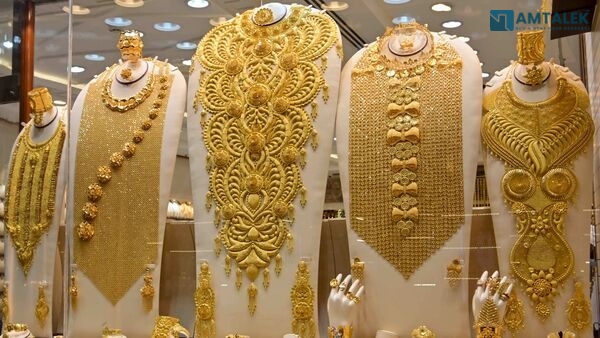
Gold price in Egypt Thursday 06/08/2026
Gold
Share on
Copy Link
Download Options
As the Egyptian market opens on Thursday, August 6, 2026, gold prices are experiencing a dynamic period, reflecting both local economic indicators and global market sentiments. Investors and consumers alike keenly watch these fluctuations, seeking clarity on the precious metal's trajectory. Amtalek is pleased to provide this comprehensive daily update on gold prices across Egypt, offering essential insights into today's market movements and what they mean for your investments.
Gold Prices in Egyptian Market Today
The price of gold in Egypt is subject to various factors, including the purity of the gold (carat), the prevailing supply and demand dynamics, and the daily exchange rate of the Egyptian Pound against major foreign currencies. Today's figures illustrate the diverse pricing structure across different carats, from 24-carat, typically favored for investment and industrial use, to 21-carat, the most popular choice for jewelry in Egypt, and lower carats like 18 and 12.
Below is a detailed breakdown of gold prices in the Egyptian market for Thursday, August 6, 2026, showcasing the buying and selling rates for various carats, as well as the price of a Troy Ounce and the Gold Pound.
| العيار | الشراء (جنيه مصري) | البيع (جنيه مصري) |
|---|---|---|
| ذهب عيار 24 | 6789 | 6766 |
| ذهب عيار 22 | 6223 | 6202 |
| ذهب عيار 21 | 5940 | 5920 |
| ذهب عيار 18 | 5092 | 5074 |
| ذهب عيار 12 | 3394 | 3383 |
| أونصة الذهب (Troy Ounce) | 211162 | 210446 |
| جنيه الذهب (8 جرام عيار 21) | 47520 | 47360 |
Highest and Lowest Gold Prices Today
A closer look at today's gold prices reveals the inherent value differences based on purity. As expected, 24-carat gold, being the purest form available in the market, commands the highest price per gram, recorded at EGP 6789 for buying and EGP 6766 for selling. This purity makes it a preferred option for high-value investments and bullion, appealing to those seeking maximum gold content.
Conversely, 12-carat gold stands at the lower end of the spectrum, with a buying price of EGP 3394 and a selling price of EGP 3383. The significantly lower price reflects its reduced gold content, making it less common for investment but sometimes utilized in specific jewelry designs where durability and cost-effectiveness are prioritized over pure gold content.
The most widely transacted carat in Egypt, 21-carat gold, is priced at EGP 5940 for buying and EGP 5920 for selling. This carat strikes an optimal balance between purity and durability, making it the preferred choice for everyday jewelry and a popular entry point for smaller investments. The difference between 24-carat and 21-carat gold highlights the premium placed on higher purity, with a notable spread of approximately EGP 849 per gram in buying price, demonstrating the market's valuation of gold content.
For investors considering larger units, the Troy Ounce of gold (approximately 31.1 grams) is priced at EGP 211162 for buying and EGP 210446 for selling. This unit is a global benchmark for gold trading. Meanwhile, the Gold Pound (8 grams of 21-carat gold), a popular and accessible investment vehicle in Egypt, is trading at EGP 47520 for buying and EGP 47360 for selling. These figures underscore the substantial value held by larger gold units and their significant role in the local investment landscape, offering a tangible asset for wealth preservation.
Factors Affecting Gold Prices in Egypt
Gold prices in Egypt are influenced by a complex interplay of local and international economic factors. Understanding these drivers is crucial for anyone looking to invest in or trade gold, as they dictate the metal's value trajectory.
USD/EGP Exchange Rate
The exchange rate between the US Dollar and the Egyptian Pound is arguably the most significant local determinant of gold prices. Given that gold is primarily traded in US Dollars on international markets, any depreciation of the Egyptian Pound against the Dollar makes gold more expensive in local currency terms. This direct correlation means that a weaker EGP typically translates to higher local gold prices, and vice versa. Fluctuations in this rate directly impact the cost of importing gold and, consequently, its price within Egypt, making it a critical indicator for investors.
Global Gold Market Trends
International gold prices, driven by global supply and demand, interest rate expectations from major central banks (like the US Federal Reserve), and the overall strength of the US Dollar, significantly influence local prices. When global gold prices rise due to factors such as increased investment demand or concerns over economic stability, Egyptian prices tend to follow suit, albeit with a lag and moderated by local currency dynamics. Investors often flock to gold during times of global economic uncertainty, pushing international prices upwards as a safe-haven asset.
Central Bank Policies
Monetary policies set by the Central Bank of Egypt (CBE) play a vital role in shaping the economic environment and, by extension, gold prices. Decisions regarding interest rates, reserve requirements, and foreign exchange interventions can directly impact inflation, the value of the Egyptian Pound, and overall investor sentiment. For example, higher interest rates might make other assets, such as bank deposits, more attractive, potentially reducing demand for gold. Conversely, policies aimed at stabilizing the currency could indirectly support gold prices by reducing volatility and enhancing its appeal as a stable asset.
Inflation and Economic Conditions
Gold is widely regarded as a traditional hedge against inflation. In periods of high inflation, the purchasing power of fiat currencies erodes, making tangible assets like gold more appealing as a store of value. Egypt's broader economic conditions, including inflation rates, GDP growth, and employment figures, directly affect consumer confidence and investment behavior. A robust economy might see investors diversifying into other sectors, while economic uncertainty often drives increased demand for gold, bolstering its price.
International Demand and Supply
The global balance of gold demand (from jewelry manufacturing, investment funds, central bank reserves, and industrial applications) and supply (from mining output, recycling, and official sales) sets the international benchmark price. Any significant shift in this balance, such as a major discovery of gold reserves or a surge in demand from large economies like India and China, can have ripple effects on prices worldwide, including in Egypt. A constrained supply or soaring demand can push prices higher, reflecting gold's finite nature and global appeal.
Geopolitical Tensions
Periods of geopolitical instability, regional conflicts, or major international crises often lead to increased demand for safe-haven assets like gold. Investors seek to protect their wealth from market volatility and economic uncertainty by moving towards assets perceived as stable. Events in the Middle East, Europe, or other critical regions can rapidly influence global investor sentiment and, consequently, gold's value, as it becomes a preferred refuge during times of global turmoil.
Gold Price Forecast
Looking ahead, the gold market in Egypt is expected to remain sensitive to both domestic economic policies and the evolving global economic landscape. With the current stability observed today, the short-term outlook suggests a period of consolidation, potentially with minor fluctuations. However, any significant changes in the USD/EGP exchange rate, shifts in global interest rate expectations, or new developments in geopolitical tensions could quickly alter this trajectory, introducing volatility.
Investors should closely monitor the Central Bank of Egypt's upcoming policy statements, particularly those related to interest rates and foreign exchange, as well as global economic indicators, especially inflation reports and central bank communications from major economies. While gold continues to serve as a crucial hedge against uncertainty, its price movements in the coming days will likely be dictated by a delicate balance of these influential factors. A cautious approach, coupled with informed decision-making, will be key for navigating the gold market in the immediate future.
Latest News
No news available