
Share this Article
Share this Article
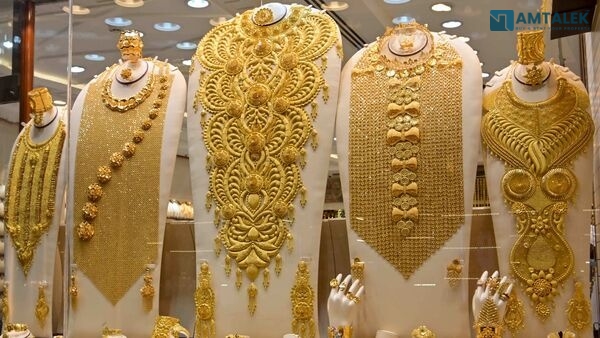
Gold price in Egypt Thursday 13/08/2026
Gold
Share on
Copy Link
Download Options
Gold price in Egypt Thursday 13/08/2026
Welcome to Amtalek's daily gold market update for Egypt. Today, Thursday, August 13, 2026, the gold market in Egypt continues to exhibit dynamic movements, influenced by a confluence of local economic indicators and international market trends. Investors and consumers alike are closely watching the precious metal, as it remains a significant store of value and a hedge against inflation in the Egyptian economy. This report provides a detailed overview of today's gold prices across various carats, alongside an analysis of the factors driving these fluctuations and a short-term forecast.
The Egyptian gold market operates within a unique economic landscape, where the local currency exchange rate, global gold prices, and domestic demand play pivotal roles in shaping daily valuations. Today's prices reflect these intricate dynamics, offering insights into the current investment climate. Amtalek is committed to providing accurate and timely information to help you navigate these market conditions effectively.
Gold Prices in Egyptian Market Today
Gold prices in the Egyptian market are subject to daily adjustments, reflecting shifts in both global spot prices and the local supply-demand balance. The value of gold is typically quoted per gram across different carats, with 24-carat gold representing the purest form, followed by 22-carat, 21-carat, and 18-carat, each containing varying proportions of pure gold mixed with other metals to enhance durability. These variations mean that the price per gram differs significantly between carats, allowing investors and consumers to choose based on their budget and investment goals. The market also tracks the price of a Troy Ounce and the popular Gold Pound, an 8-gram unit of 21-carat gold, widely used for investment and savings in Egypt.
Below are the latest gold prices in Egyptian Pounds (EGP) for buying and selling, as of Thursday, August 13, 2026:
| العيار | الشراء (جنيه مصري) | البيع (جنيه مصري) |
|---|---|---|
| ذهب عيار 24 | 7206 | 7183 |
| ذهب عيار 22 | 6606 | 6584 |
| ذهب عيار 21 | 6305 | 6285 |
| ذهب عيار 18 | 5404 | 5387 |
| ذهب عيار 12 | 3603 | 3592 |
| أونصة الذهب (Troy Ounce) | 224132 | 223416 |
| جنيه الذهب (8 جرام عيار 21) | 50440 | 50280 |
Highest and Lowest Gold Prices Today
An analysis of today's gold prices reveals a clear hierarchy based on purity and weight. As expected, 24-carat gold, being the purest form, commands the highest price per gram, with a buying price of 7206 EGP. This carat is often preferred by investors seeking to hold the maximum intrinsic value of gold.
Conversely, 12-carat gold registered the lowest price per gram at 3603 EGP for buying. The significant difference between 24-carat and 12-carat gold, almost double, underscores the impact of purity on value. While 12-carat gold is less common for investment purposes, it might be found in certain jewelry items where durability and design take precedence over pure gold content.
21-carat gold remains the most popular and widely traded carat in Egypt, balancing purity with durability, making it suitable for both jewelry and investment. Today, it is priced at 6305 EGP for buying. The 18-carat gold, often used for intricate jewelry designs due to its hardness, is priced at 5404 EGP.
For larger investments, the Troy Ounce, an international standard unit of measurement, is trading at 224132 EGP for buying. The Gold Pound (8 grams of 21-carat gold), a favored investment vehicle among Egyptians, is valued at 50440 EGP for buying. The spread between buying and selling prices across all carats, though relatively small, represents the profit margin for traders and should always be considered by consumers. For instance, the 21-carat gold shows a 20 EGP difference (6305 EGP buy vs 6285 EGP sell), while the Gold Pound has a 160 EGP difference (50440 EGP buy vs 50280 EGP sell).
Factors Affecting Gold Prices in Egypt
The price of gold in Egypt is a complex interplay of several macroeconomic and geopolitical factors. Understanding these drivers is crucial for anyone involved in the gold market.
USD/EGP Exchange Rate
The exchange rate between the US Dollar and the Egyptian Pound is perhaps the most critical local determinant of gold prices. Since gold is primarily traded in US Dollars on international markets, any depreciation of the Egyptian Pound against the Dollar directly translates to higher gold prices in local currency. A weaker EGP makes it more expensive for local buyers to acquire gold, even if the international dollar price remains stable. Conversely, a stronger EGP could lead to a decrease in local gold prices.
Global Gold Market Trends
International gold prices, often referred to as spot gold prices, set the baseline for local markets. These global prices are influenced by factors such as the strength of the US Dollar index, US Federal Reserve monetary policy (interest rate decisions), and global economic data releases. When the US Dollar strengthens, gold typically becomes less attractive to international investors, pushing its dollar price down, and vice versa.
Central Bank Policies
The monetary policies enacted by the Central Bank of Egypt (CBE) have a profound impact. Interest rate decisions, for instance, can affect the attractiveness of holding gold versus interest-bearing assets like bank deposits. Higher interest rates might make EGP-denominated savings more appealing, potentially reducing demand for gold. Additionally, the CBE's foreign exchange policies and interventions directly influence the USD/EGP exchange rate, further impacting gold prices.
Inflation and Economic Conditions
Gold is traditionally viewed as a safe haven asset and a hedge against inflation. In periods of high inflation or economic uncertainty within Egypt, demand for gold tends to increase as individuals seek to preserve their purchasing power. Conversely, during periods of economic stability and growth, investment interest might shift towards more productive assets, potentially easing demand for gold. Local economic sentiment and consumer confidence also play a role in shaping investment decisions.
International Demand and Supply
Global demand for gold, driven by jewelry consumption, industrial use, central bank purchases, and investment, impacts its international price. Supply-side factors, such as mining output, recycling rates, and sales from central bank reserves, also influence the balance. Any significant shifts in these global supply and demand dynamics can ripple through to the Egyptian market.
Geopolitical Tensions
Global geopolitical events, such as conflicts, trade wars, or political instability in major regions, often lead to a surge in gold prices. Investors typically flock to safe-haven assets during times of uncertainty, and gold is a primary beneficiary of such flight-to-safety movements. The interconnectedness of global markets means that even distant events can influence local gold prices in Egypt.
Gold Price Forecast
Looking ahead, the gold market in Egypt is expected to remain sensitive to both global economic sentiment and domestic policy developments. The short-term outlook suggests continued volatility, primarily driven by the ongoing uncertainty surrounding global inflation trends and the trajectory of central bank interest rates worldwide.
Domestically, the stability of the Egyptian Pound against major currencies, particularly the US Dollar, will be a key factor. Any significant shifts in the EGP exchange rate, whether due to policy decisions or market forces, will directly influence local gold prices. Furthermore, the Central Bank of Egypt's stance on interest rates and its efforts to manage inflation will continue to shape local investment preferences between gold and other financial instruments.
Investors and consumers are advised to closely monitor international gold price movements, the USD/EGP exchange rate, and local economic announcements. While gold's role as a safe haven remains strong, its short-term price movements can be unpredictable. Long-term prospects continue to be supported by its intrinsic value and hedging capabilities against economic uncertainties.
This service is provided by Amtalek Realestate Platform
Latest News
No news available