
Share this Article
Share this Article
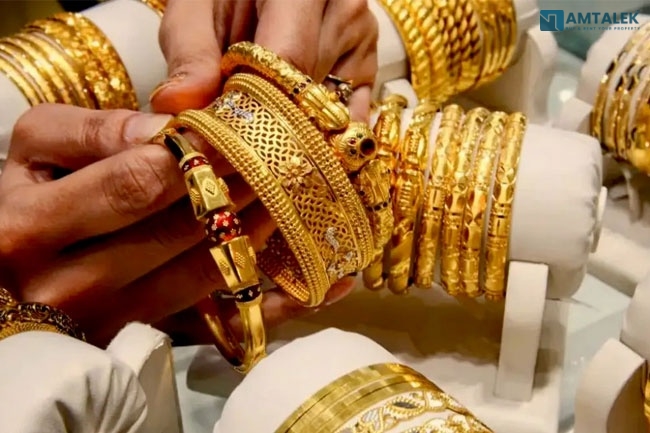
Gold price in Egypt Tuesday 11/08/2026
Gold
Share on
Copy Link
Download Options
Gold Price in Egypt Tuesday 11/08/2026
Tuesday 11/08/2026
The Egyptian gold market opened on Tuesday, August 11, 2026, with a palpable sense of anticipation among investors and consumers alike. After a period of varied movements, today's prices reflect a complex interplay of local economic indicators and global market sentiments. This daily gold price service, diligently provided by Amtalek, aims to offer comprehensive insights into the precious metal's performance, empowering individuals with the knowledge needed to make informed decisions in a dynamic financial landscape. Gold continues to serve as a crucial barometer of economic health and a preferred safe haven asset, especially in times of uncertainty. As we delve into the specifics of today's market, we will examine the current prices across various carats, analyze the factors driving these valuations, and offer a forward-looking perspective on what the coming days might hold for the glittering commodity in Egypt.
Gold Prices in Egyptian Market Today
Gold prices in the Egyptian market are dynamic, fluctuating throughout the day based on a multitude of factors, including global spot prices, the local exchange rate, and domestic demand. The following table presents the current gold prices across different carats, including the popular 24-carat, 21-carat, and 18-carat options, as well as the prices for a Troy Ounce and the Egyptian Gold Pound. These figures represent the buying and selling rates in Egyptian Pounds (EGP) as of today, Tuesday, August 11, 2026, and serve as a vital reference for anyone looking to engage with the gold market.
| العيار | الشراء (جنيه مصري) | البيع (جنيه مصري) |
|---|---|---|
| ذهب عيار 24 | 7109 | 7075 |
| ذهب عيار 22 | 6517 | 6485 |
| ذهب عيار 21 | 6220 | 6191 |
| ذهب عيار 18 | 5332 | 5306 |
| ذهب عيار 12 | 3554 | 3538 |
| أونصة الذهب (Troy Ounce) | 221115 | 220057 |
| جنيه الذهب (8 جرام عيار 21) | 49760 | 49528 |
Highest and Lowest Gold Prices Today
An analysis of today's gold prices in the Egyptian market reveals clear distinctions across different carats, reflecting the varying purities and their corresponding market values. Unsurprisingly, 24-carat gold, representing the highest purity, commands the highest price today, with a buying rate of EGP 7109 per gram and a selling rate of EGP 7075. This premium reflects its status as the purest form of gold available for investment and industrial use.
Conversely, 12-carat gold is positioned at the lower end of the spectrum, with a buying price of EGP 3554 and a selling price of EGP 3538 per gram. This carat, containing 50% pure gold, is typically used for specific jewelry items where durability and design flexibility are prioritized over maximum gold content. The price difference between 24-carat and 12-carat gold highlights the direct correlation between purity and cost in the market.
The widely popular 21-carat gold, a favorite among Egyptian consumers for jewelry and investment, stands at a buying price of EGP 6220 and a selling price of EGP 6191. This carat strikes a balance between purity and durability, making it highly sought after. Similarly, 18-carat gold, commonly used in more intricate jewelry designs, is priced at EGP 5332 for buying and EGP 5306 for selling. The difference between 21-carat and 18-carat gold is notable, indicating how even a slight variation in purity can impact the price per gram.
Beyond per-gram prices, the table also provides insights into larger investment units. A Troy Ounce of gold, a standard measure in international markets, is valued at EGP 221115 for buying and EGP 220057 for selling. The Gold Pound, a traditional investment vehicle in Egypt (equivalent to 8 grams of 21-carat gold), is quoted at EGP 49760 for buying and EGP 49528 for selling. These larger units often present more cost-effective options for significant investments, benefiting from slight discounts compared to purchasing individual grams.
Factors Affecting Gold Prices in Egypt
The price of gold in Egypt is not determined in isolation but is rather a complex interplay of various local and international economic, political, and financial factors. Understanding these drivers is crucial for anyone monitoring the market:
-
USD/EGP Exchange Rate
Perhaps the most significant local determinant, the exchange rate between the US Dollar and the Egyptian Pound directly impacts gold prices. Since gold is primarily traded in US Dollars on international markets, a depreciation of the Egyptian Pound against the Dollar makes imported gold more expensive in local currency terms, pushing prices higher. Conversely, a strengthening EGP can lead to lower local gold prices, assuming global dollar prices remain stable.
-
Global Gold Market Trends
Egyptian gold prices are heavily influenced by international spot gold prices. Factors affecting the global market, such as monetary policy decisions by major central banks (like the US Federal Reserve), fluctuations in the value of the US Dollar against other major currencies, and global investment demand for gold as a safe haven, all ripple down to the local market. A surge in global demand or a weakening dollar typically boosts international gold prices, subsequently impacting Egypt.
-
Central Bank Policies
The Central Bank of Egypt's monetary policies, particularly interest rate decisions, play a crucial role. When interest rates are high, holding interest-bearing assets like bonds or savings accounts becomes more attractive, potentially reducing demand for non-yielding assets like gold. Conversely, lower interest rates can diminish the opportunity cost of holding gold, making it a more appealing investment. The Central Bank's measures to manage inflation and stabilize the EGP also indirectly affect gold's attractiveness.
-
Inflation and Economic Conditions
Gold has historically been considered a hedge against inflation. When inflation rates are high and the purchasing power of the local currency erodes, investors often turn to gold to preserve wealth. In periods of economic uncertainty or slowdowns, gold's appeal as a safe store of value increases, leading to higher demand and consequently higher prices. The overall health and stability of the Egyptian economy, including GDP growth and employment rates, can therefore influence investor sentiment towards gold.
-
International Demand and Supply
While Egypt is a consumer market for gold, global demand and supply dynamics significantly affect its local pricing. Major gold-producing nations, large-scale institutional buying or selling, and demand from key consumer markets like India and China all contribute to the global supply-demand balance. Any significant shift in these international factors can alter global gold prices, which are then reflected in the Egyptian market after accounting for the exchange rate.
-
Geopolitical Tensions
Global political instability, conflicts, trade wars, or major geopolitical events often trigger a "flight to safety" among investors. In such scenarios, gold's status as a traditional safe-haven asset is reinforced, leading to increased demand and upward pressure on prices. Local geopolitical developments, while perhaps having a more immediate but often temporary impact, can also influence domestic investor sentiment and gold purchasing patterns.
Gold Price Forecast
Looking ahead, the gold market in Egypt is expected to remain subject to the ongoing interplay of domestic economic reforms and global financial currents. For the coming days, a cautious outlook suggests potential for continued volatility. The EGP's stability against the USD will be a primary determinant; any significant movements in the exchange rate could directly influence local gold prices. Globally, investor sentiment will likely be guided by upcoming economic data releases from major economies and any shifts in central bank rhetoric regarding interest rates.
Should global economic uncertainties persist or geopolitical tensions escalate, gold's appeal as a safe haven could strengthen, potentially pushing prices higher. Conversely, signs of robust global economic recovery or a stronger US Dollar might temper gold's upward momentum. Domestically, ongoing efforts to manage inflation and enhance economic stability will also play a role in shaping local demand for gold. Investors and consumers are advised to stay informed of market developments and consider both short-term fluctuations and long-term trends before making investment decisions.
Latest News
No news available