
Share this Article
Share this Article
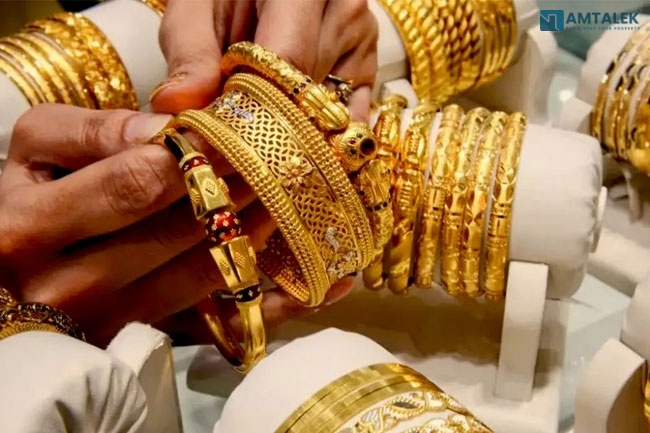
Gold price in Egypt Wednesday 12/08/2026
Gold
Share on
Copy Link
Download Options
Gold price in Egypt Wednesday 12/08/2026
Wednesday 12/08/2026
The Egyptian gold market today, Wednesday, August 12, 2026, witnesses dynamic fluctuations influenced by a confluence of local and international economic factors. This daily gold price service, provided by Amtalek, aims to offer a comprehensive overview of the market's performance, providing investors and consumers with the crucial information needed to navigate their decisions. As the global economic landscape continues to evolve, the precious metal maintains its role as a key safe-haven asset, drawing significant attention from various segments of the Egyptian population. Today's movements reflect ongoing adjustments to both the domestic currency's strength and broader global commodity trends, making informed analysis more critical than ever.
Gold Prices in Egyptian Market Today
Gold prices in the Egyptian market are subject to daily changes, primarily influenced by global market rates, the exchange rate of the US Dollar against the Egyptian Pound, and local supply and demand dynamics. The price of gold varies significantly based on its purity, commonly referred to as carats, with higher carats indicating a greater percentage of pure gold content. Understanding these variations is essential for both buyers and sellers to assess the true value of their transactions in a volatile market. Below is a detailed breakdown of gold prices across different carats as of today's market opening.
| العيار | الشراء (جنيه مصري) | البيع (جنيه مصري) |
|---|---|---|
| ذهب عيار 24 | 7177 | 7143 |
| ذهب عيار 22 | 6579 | 6548 |
| ذهب عيار 21 | 6280 | 6250 |
| ذهب عيار 18 | 5383 | 5357 |
| ذهب عيار 12 | 3588 | 3572 |
| أونصة الذهب (Troy Ounce) | 223230 | 222172 |
| جنيه الذهب (8 جرام عيار 21) | 50240 | 50000 |
Highest and Lowest Gold Prices Today
An analysis of today's gold prices in the Egyptian market reveals a clear hierarchy based on purity. Gold of 24-carat purity, which represents the purest form available in the market, registers the highest price today, standing at EGP 7177 for buying per gram and EGP 7143 for selling. This premium reflects its higher gold content and is typically sought after for investment purposes rather than intricate jewelry.
Conversely, gold of 12-carat purity is recorded as the lowest in price, with a buying rate of EGP 3588 per gram and a selling rate of EGP 3572. This significant difference, almost half the price of 24-carat gold, is attributed to its much lower pure gold content, making it more suitable for certain types of jewelry where durability and lower cost are prioritized over purity.
The widely popular 21-carat gold, a common choice for jewelry and the standard for the Egyptian Gold Pound, is priced at EGP 6280 for buying per gram and EGP 6250 for selling. The Gold Pound (8 grams of 21-carat gold) is consequently valued at EGP 50240 for buying and EGP 50000 for selling. The price difference between 24-carat and 21-carat gold per gram is substantial, approximately EGP 897 (7177 - 6280), highlighting the impact of even a small reduction in purity. Similarly, 18-carat gold, often used for intricate designs, trades at EGP 5383 for buying and EGP 5357 for selling, further illustrating the proportional relationship between caratage and market value. These variations underscore the importance of understanding the specific purity when engaging in gold transactions.
Factors Affecting Gold Prices in Egypt
Gold prices in Egypt are not merely a reflection of global trends but are intricately linked to a complex web of domestic and international economic factors. Understanding these drivers is crucial for predicting market movements and making informed investment decisions.
USD/EGP Exchange Rate
Perhaps the most significant local determinant of gold prices is the exchange rate between the US Dollar and the Egyptian Pound. Since gold is primarily traded in US Dollars on international markets, any depreciation of the Egyptian Pound against the Dollar automatically makes gold more expensive in local currency terms, even if its global Dollar price remains constant. Conversely, a stronger EGP could lead to lower local gold prices. The stability and availability of foreign currency within Egypt's banking system play a critical role in shaping this exchange rate and, by extension, the local gold market.
Global Gold Market Trends
Egyptian gold prices are inherently influenced by international gold prices, which are determined by supply and demand dynamics in major global markets like London and New York. Factors such as global interest rates, the performance of the US Dollar internationally, geopolitical stability, and investor sentiment towards risk assets all contribute to the international price of gold. When global gold prices rise, a corresponding increase is typically observed in Egypt, assuming other local factors remain stable.
Central Bank Policies
The Central Bank of Egypt's monetary policies, particularly interest rate decisions, can indirectly affect gold prices. Higher interest rates on local currency deposits might reduce the attractiveness of non-yielding assets like gold, as investors seek better returns from bank savings or government bonds. Conversely, lower interest rates or policies aimed at stimulating economic growth could make gold a more appealing investment alternative.
Inflation and Economic Conditions
Gold has historically been regarded as a hedge against inflation and economic uncertainty. In periods of high inflation, where the purchasing power of the Egyptian Pound erodes, investors often turn to gold to preserve their wealth, driving up demand and prices. Broader economic conditions, including GDP growth, employment rates, and consumer confidence, also play a role. A struggling economy might push more individuals towards safe-haven assets like gold, while a booming economy could divert investment towards more productive sectors.
International Demand and Supply
While local demand and supply are important, global demand and supply dynamics also have a profound impact. Significant purchases or sales by central banks, large institutional investors, or major gold-consuming nations like India and China can shift global prices. Disruptions in gold mining operations or significant discoveries can also affect the overall supply, influencing prices worldwide and subsequently in Egypt.
Geopolitical Tensions
Periods of heightened geopolitical instability, international conflicts, or major global crises often trigger a flight to safety among investors. Gold, being a traditional safe haven, sees increased demand during such times, leading to price surges. Events in the Middle East, broader global conflicts, or even major political shifts can therefore have a direct and immediate effect on gold's perceived value and price in Egypt.
Gold Price Forecast
Looking ahead, the gold market in Egypt is expected to remain sensitive to both local economic developments and the trajectory of global financial markets. Given the current economic climate, characterized by ongoing efforts to stabilize the Egyptian Pound and manage inflationary pressures, gold's appeal as a store of value is likely to persist. Any significant shifts in the USD/EGP exchange rate, whether due to Central Bank interventions or international capital flows, will be pivotal in determining short-to-medium term price movements. Globally, concerns over inflation in major economies and potential shifts in central bank interest rate policies will continue to influence international gold prices, which will inevitably ripple into the Egyptian market. Investors and consumers should anticipate continued volatility, with gold likely maintaining its role as an important asset for wealth preservation in uncertain times, while also being subject to short-term speculative pressures.
This service is provided by Amtalek Realestate Platform
Latest News
No news available