
Share this Article
Share this Article
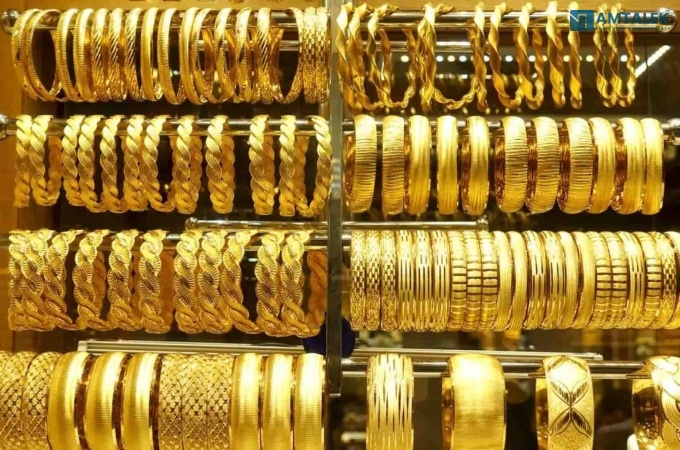
Gold price in Egypt Wednesday 16/09/2026
Gold
Share on
Copy Link
Download Options
Gold Price in Egypt Wednesday 16/09/2026
Wednesday 16/09/2026
The Egyptian gold market today, Wednesday, September 16, 2026, witnesses dynamic shifts in prices, reflecting a complex interplay of local and international economic forces. As investors and consumers closely monitor these fluctuations, understanding the underlying drivers becomes crucial. This daily gold price service is proudly provided by Amtalek, offering comprehensive and up-to-date insights into the precious metal's performance across various carats in the Egyptian market.
Gold has historically served as a reliable hedge against inflation and economic uncertainty, making its price movements a key indicator of economic sentiment. Today's report delves into the current valuations, analyzes the highest and lowest price points, and explores the multifaceted factors that shape gold's value in Egypt, concluding with a short-term forecast.
Gold Prices in Egyptian Market Today
Gold prices in the Egyptian market are subject to daily, sometimes hourly, changes, influenced by a myriad of factors including global spot prices, the strength of the Egyptian Pound against major currencies, and local supply and demand dynamics. The price of gold also varies significantly depending on its purity, commonly referred to as carats, with higher carats commanding higher prices due to a greater gold content. The following table provides the latest gold prices in Egyptian Pounds (EGP) for various carats and gold units as of today, Wednesday, September 16, 2026:
| العيار | الشراء (جنيه مصري) | البيع (جنيه مصري) |
|---|---|---|
| ذهب عيار 24 | 7143 | 7120 |
| ذهب عيار 22 | 6548 | 6527 |
| ذهب عيار 21 | 6250 | 6230 |
| ذهب عيار 18 | 5357 | 5340 |
| ذهب عيار 12 | 3572 | 3560 |
| أونصة الذهب (Troy Ounce) | 222172 | 221457 |
| جنيه الذهب (8 جرام عيار 21) | 50000 | 49840 |
Highest and Lowest Gold Prices Today
An analysis of today's gold prices reveals a clear hierarchy based on purity and weight. As expected, gold of higher purity fetches a higher price per gram. Specifically, 24-carat gold stands as the highest priced carat today, with a buying price reaching EGP 7143 per gram and a selling price of EGP 7120 per gram. This reflects its status as the purest form of gold available in the market, often preferred for investment purposes rather than intricate jewelry due to its softness.
Conversely, 12-carat gold is recorded as having the lowest price among the listed carats, with a buying price of EGP 3572 per gram and a selling price of EGP 3560 per gram. This lower valuation is directly attributable to its significantly reduced gold content, making it a more affordable option but less desirable for pure investment. The price difference between 24-carat and 12-carat gold is substantial, nearly double, underscoring the premium placed on purity in the gold market.
Beyond individual carats, the table also highlights the price of a Troy Ounce and the Gold Pound. A Troy Ounce of gold, a standard international measure, is currently priced at EGP 222172 for buying and EGP 221457 for selling. This reflects the global benchmark for gold. Meanwhile, an 8-gram Gold Pound (21-carat) is valued at EGP 50000 for buying and EGP 49840 for selling. This unit is particularly popular in Egypt for saving and investment, offering a tangible asset that is easily tradable. The price of a Gold Pound, being an 8-gram unit of 21-carat gold, logically aligns with eight times the price of one gram of 21-carat gold, providing a convenient investment vehicle for many Egyptians.
Factors Affecting Gold Prices in Egypt
Gold prices in Egypt are not determined in isolation but are influenced by a complex web of interconnected local and global economic factors. Understanding these dynamics is crucial for anyone involved in the gold market:
-
USD/EGP Exchange Rate
The exchange rate between the US Dollar and the Egyptian Pound is perhaps the most critical determinant of local gold prices. Since gold is primarily traded in US Dollars on international markets, a depreciation of the Egyptian Pound against the Dollar makes imported gold more expensive in local currency terms, pushing up prices. Conversely, a stronger EGP can lead to lower local gold prices, assuming other factors remain constant. Any significant devaluation or revaluation of the EGP has an immediate and pronounced impact on the cost of gold for Egyptian buyers.
-
Global Gold Market Trends
International gold prices, often referred to as spot prices, set the fundamental benchmark for gold worldwide. These global prices are influenced by factors such as interest rate expectations in major economies (especially the US), the strength of the US Dollar index, and global investor sentiment towards safe-haven assets. When international gold prices rise, it typically translates to higher prices in Egypt, adjusted for the local exchange rate.
-
Central Bank Policies
The monetary policies enacted by the Central Bank of Egypt (CBE) play a significant role. Interest rate decisions, for instance, can affect the attractiveness of holding gold versus interest-bearing assets. Higher interest rates might make gold less appealing as it does not yield interest. Additionally, the CBE's foreign exchange policies and interventions directly impact the USD/EGP exchange rate, thereby indirectly influencing gold prices.
-
Inflation and Economic Conditions
Gold is widely regarded as a hedge against inflation. When inflation rises, the purchasing power of fiat currencies erodes, making tangible assets like gold more attractive to investors seeking to preserve their wealth. In times of economic instability or high inflation in Egypt, demand for gold tends to increase, putting upward pressure on local prices. Conversely, a stable or improving economic outlook might reduce the urgency for safe-haven assets.
-
International Demand and Supply
Global demand for gold, driven by jewelry consumption, industrial use, and investment, influences international prices. Major gold-producing and consuming nations, along with central bank gold purchases, contribute to supply and demand dynamics. Any significant disruption in global supply chains or a surge in demand from large economies can ripple through to the Egyptian market.
-
Geopolitical Tensions
Periods of heightened geopolitical tension or global uncertainty often lead to an increased demand for gold as a safe-haven asset. Conflicts, political instability, or major international crises can cause investors to flock to gold, driving up its price. Egypt, being part of a dynamic regional and global landscape, is not immune to these influences, and such events can trigger immediate reactions in its local gold market.
Gold Price Forecast
Looking ahead, the gold market in Egypt is expected to remain highly sensitive to both domestic economic developments and global trends. In the short term, the trajectory of the USD/EGP exchange rate will likely be the primary local driver. Any further depreciation of the Egyptian Pound could provide upward momentum to gold prices, maintaining its appeal as a store of value against local currency fluctuations. Globally, expectations surrounding interest rate policies by major central banks, particularly the US Federal Reserve, will continue to shape international gold prices. Should global economic uncertainties persist or escalate, demand for safe-haven assets like gold is likely to remain robust. Investors and consumers should monitor these key indicators closely, as the inherent volatility of the precious metal market suggests potential for continued price movements in the coming days.
This service is provided by Amtalek Realestate Platform
Latest News
No news available